Skip to content
The part of the process nobody writes down
What Nobody ExplainsThe part of the process nobody writes down

Queues & Waiting

Why an unexplained wait feels twice as long as an explained one

Waiting is experienced rather than measured, and a handful of design decisions change the experience without changing a single minute.

By Anjali Raghunathan4 min read

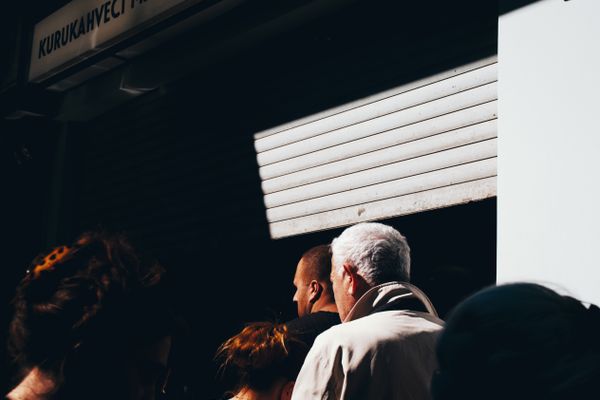
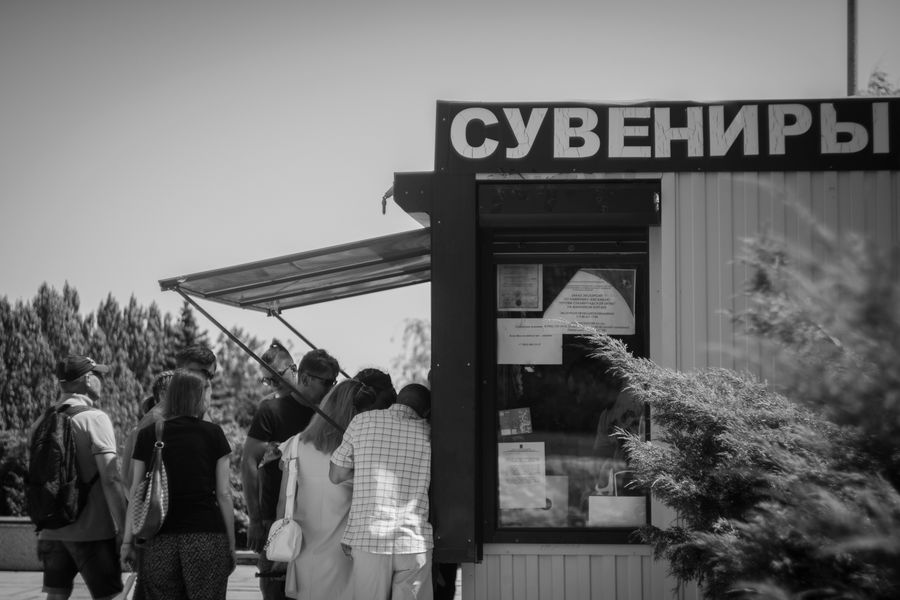
A group of people standing at a souvenir shop in a monochrome outdoor setting.
Photograph by Мария Кашина via Pexels
Editorial note. Independent reporting and analysis. Nothing here is sponsored or paid for. How we work.

Two waits of equal length are not equal

Ten minutes standing in a line with no information and ten minutes standing in a line with a visible position and a stated reason are the same ten minutes by the clock and nothing like the same experience. Anybody who has waited for both knows this, and the people who design waiting areas have known it for a long time.

The interesting part is that the mechanisms are quite specific, and they can be listed. This is not a general observation that patience varies. It is a set of levers, most of which cost very little, and their presence or absence in a given waiting area is usually a deliberate choice rather than an accident.

Unoccupied time runs slower than occupied time

The first lever is what you are doing while you wait. A wait with nothing in it is attended to directly, and attending to a wait is what makes it feel long. Give the same period some content — a form to complete, a queue to walk along, something to read that is genuinely worth reading — and the elapsed time is estimated shorter afterwards.

This is the reasoning behind a great deal of otherwise puzzling design. Documents handed out to be completed while waiting rather than at the counter. Corridors that walk you towards a destination instead of holding you at the start of it. Mirrors near lifts, which is the classic example and works because a person looking at something has stopped counting seconds. None of it shortens the wait; all of it shortens the reported wait, which is the number the organisation is actually being judged on.

Uncertainty is the expensive part

The second lever is knowing how long. An unknown wait is worse than a known one of the same length, because an unknown wait cannot be planned around and has to be monitored continuously. You cannot settle into it. Every minute contains the possibility that it is nearly over, which sounds like optimism and functions as constant low-level attention.

Worse still is a wait with no explanation. An unexplained pause invites the conclusion that nothing is happening, and a wait believed to be pointless is tolerated far less well than a wait believed to be productive. This is why the most valuable sentence in any waiting area is a short statement of cause — a system being slow, a colleague being fetched, a batch being processed — even when the sentence changes nothing about the duration.

Visible progress does most of the work

A moving line provides something a numbered ticket does not: continuous evidence that the process is running. You can see people leave the front. You can see your own position change. That feedback is why people will often tolerate a longer physical queue more comfortably than a shorter wait in a seated area with no indication of movement.

Where the line is invisible, progress has to be supplied artificially, which is what position displays and progress messages are for. The design constraint is that progress must be believable. A counter that shows a number moving steadily is reassuring; one that jumps around, or sits still for long stretches, is worse than showing nothing at all, because it converts an uncertain wait into an apparently stalled one.

The unfairness penalty

Perceived queue-jumping produces an outsized reaction, and it is not simply irritation. A wait believed to be unfair is experienced as substantially longer than the same wait believed to be fair, which is why arrangements that are objectively sensible can be badly received if the reason is not visible.

Priority lanes are the standard example. A separate line for a class of customer is accepted readily when the basis is stated and applied consistently, and resented when someone is simply taken ahead with no explanation offered. The mechanism being protected here is not fairness in the abstract. It is the observer’s ability to reconstruct why the order is what it is, from where they are standing.

Beginnings, endings and the anxiety of not being counted

Two further points are worth knowing. Waits before a process starts feel longer than waits in the middle of one, which is why being registered, ticketed or acknowledged early matters more than the acknowledgement itself achieves. And the worst moment in almost any wait is the uncertainty about whether you are in the queue at all.

That is the real function of the ticket, the wristband, the message confirming receipt and the person who catches your eye and says they will be right with you. None of them advances your case by a second. All of them convert an open-ended anxiety into a bounded wait, and the difference between those two states is much larger than the difference a few minutes would make.

Common questions

Do estimated wait times help even when inaccurate?

Generally yes, provided the estimate is honest and errs long. A wait that finishes earlier than stated is experienced well; one that overruns a confident estimate is experienced worse than having been told nothing, because the estimate becomes a promise that was broken.

Why are seats sometimes removed from waiting areas?

Usually to keep a queue visible and moving rather than to make anyone uncomfortable, since a standing line supplies the progress feedback a seated area cannot. It is a genuine trade-off, and it is the wrong choice wherever waits are long or people are unwell.

Is hold music doing anything useful?

It answers one narrow question continuously, which is whether the call is still connected. Silence on a line is read as a disconnection within seconds, so something has to occupy the channel, and periodic position or progress announcements do the job considerably better than music alone.

Queues & Waitingqueueswaitingdesignservice
Anjali Raghunathan
Deputy editor, What Nobody Explains

Anjali joined to cover behind the counter, paperwork, queues & waiting and stayed for the awkward questions and reads the small print so you do not have to.