Skip to content
The part of the process nobody writes down
What Nobody ExplainsThe part of the process nobody writes down

Small Print

The clause that describes how the clauses can be changed

A variation clause decides whether the document you agreed to is a fixed thing or a moving one, and it is usually a single short paragraph near the end.

By Zoya Rahman4 min read

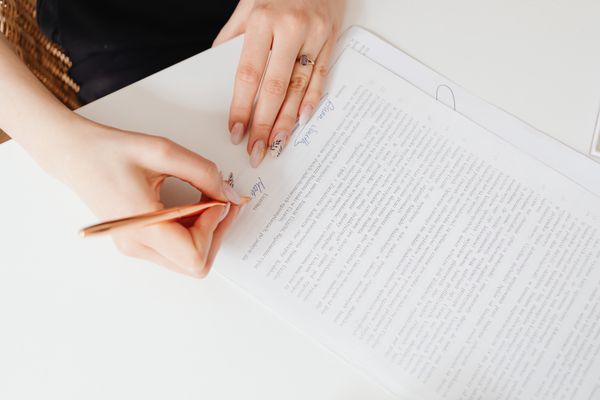
A couple collaboratively signs legal documents in the presence of an advisor.
Photograph by Ron Lach via Pexels
Editorial note. Independent reporting and analysis. Nothing here is sponsored or paid for. How we work.

One paragraph decides whether the rest is stable

Somewhere in most long agreements is a short clause explaining how the agreement itself may be altered. It’s easy to skip, because it appears among the closing provisions where attention has already collapsed, and it governs everything above it. Whether the document is a fixed set of terms or a moving one is settled there and nowhere else.

The range is wide. At one end sits a clause requiring any change to be agreed in writing by both parties, which makes the document stable. At the other sits a clause permitting one party to change the terms by publishing a new version, which makes the document a snapshot of a position that may not survive the year. Most commercial arrangements sit somewhere in between, and where exactly is the thing worth knowing.

Notice is the mechanism, and its details matter

Where unilateral change is permitted, the clause almost always attaches conditions, and the conditions are the substance. How much notice must be given. How it must be delivered — by post, by email, by publishing on a website, or by a note on a statement. What happens if you do nothing.

That last point is the one that catches people, because continued use is very commonly treated as acceptance. Under such a clause, silence isn’t neutral; it is the route by which a change becomes part of the arrangement. The notice period is therefore the window in which any response has to happen, and it starts running from delivery as the clause defines delivery, which may be several days before anything reaches you.

Documents split into a stable part and a moving part

Many arrangements separate terms that rarely change from schedules that change often — a price list, a service description, a set of technical limits. The main terms then include a line saying that the schedule may be updated and that the current version applies.

That structure is convenient for the party maintaining it and it has an obvious consequence for the other side. What you agreed to may consist of a stable half and a half that has since been rewritten, and the second half often contains the numbers. When somebody says the terms have not changed, that statement can be entirely true of the terms while the schedule they point at is on its fourth revision.

The reasons and limits written into the clause

Better-drafted variation clauses constrain themselves. They list the grounds on which change may be made, they exclude certain core provisions from unilateral change, they cap what may be varied within a period, or they attach a right to exit without penalty where a change is material.

Those constraints are worth locating precisely because they are the useful part. A clause permitting change for any reason at any time is doing something different from one permitting change to reflect a defined set of external costs, even though both occupy a paragraph of similar length. And an exit right attached to material change is one of the few provisions in a long document that gives the other party a lever, which is why it repays finding before it is needed rather than afterwards.

Why unilateral variation exists at all

It is easy to read the whole arrangement as one-sided, and the reason for it is more prosaic. An organisation with a very large number of customers on a continuing arrangement cannot renegotiate individually every time a cost, a supplier or a technical requirement changes. Without a variation mechanism, the practical alternatives are to terminate and re-offer, or to price the arrangement so conservatively that it covers every future contingency.

That is an explanation rather than a defence, and the balance struck varies enormously between documents. Some clauses are narrow and reasonable; some are broad enough to make the rest of the agreement provisional. Reading which kind you are looking at takes a minute and tells you more about the arrangement than several pages of the operative terms will.

Where to find it and what to do with it

It usually sits near the end, under a heading such as variation, amendment, or changes to these terms, and in consumer-facing documents it is often near the sections on notices and termination. Read it alongside the definition of notice, since the two together determine what counts as having been told.

The practical habit is to save your own copy at the point of agreement and to keep the notices you receive afterwards, because those two things together are the record of what applies. This is general description of how such clauses work rather than advice about any particular document, and where a change has real consequences for you, the position should be checked with somebody qualified to look at the actual wording.

Common questions

Where is the variation clause usually found?

Near the end, among the closing provisions, under a heading such as variation, amendment or changes to these terms. In consumer documents it commonly sits close to the sections dealing with notices and termination, and it is worth reading those together since they define what counts as having been notified.

Does continuing to use a service count as agreeing to a change?

Many clauses say so explicitly, treating continued use after a notice period as acceptance. That is why the notice period matters so much: it is the window in which anything other than acceptance has to happen, and it typically starts from delivery as the document defines delivery.

Why are prices often in a separate schedule?

Because separating the frequently changing material from the stable terms lets one be revised without reopening the other. The consequence is that the agreement you hold may pair original terms with a schedule that has since been updated several times.

Small Printcontractsvariationtermssmall print
Zoya Rahman
Consumer editor, What Nobody Explains

Zoya has written about behind the counter, paperwork, queues & waiting for most of the last decade and thinks most subjects are more interesting once you know how they work.