Skip to content
The part of the process nobody writes down
What Nobody ExplainsThe part of the process nobody writes down

Small Print

Why the terms have a version number in the footer

Document control is the unglamorous machinery that decides which version of an agreement governs, and it explains several things that look arbitrary.

By Amrita Kohli4 min read

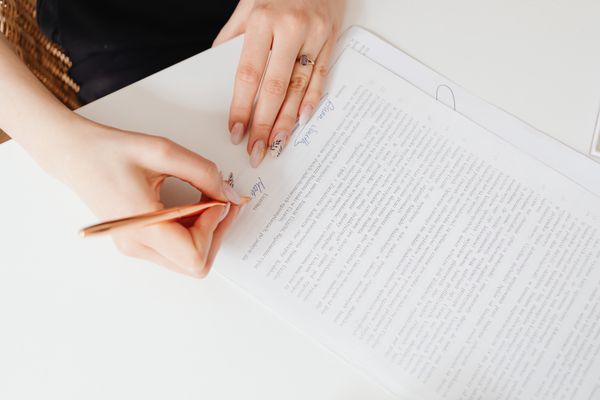
Close-up of two adults reviewing and signing a legal document with pens indoors.
Photograph by RDNE Stock project via Pexels
Editorial note. Independent reporting and analysis. Nothing here is sponsored or paid for. How we work.

The small print at the bottom of the small print

Look at the foot of almost any set of terms and there will be a code: a version number, a date, sometimes a document reference that appears nowhere else. It is the least read text on a page nobody reads, and it is the piece that determines which text applies to you.

This is document control, the same discipline that governs manuals, procedures and forms in any organisation of size. It exists because the alternative is chaos: a document circulating in several variants, each believed by somebody to be current, with no way of telling them apart at a glance.

Agreements are captured at a moment

What generally governs an arrangement is the version in force when it was entered into, not the version currently on the website. Those two can differ substantially, particularly for an arrangement several years old, and the current version is often the only one easy to find.

That is precisely why organisations keep versioned copies and why the version code exists at all. When a question arises about what was agreed, the first task is establishing which text applied at the time, and the version code is what makes that possible without archaeology. It is also why a copy of the terms as they stood when you signed is worth keeping, since it is the one document nobody else has a strong incentive to give you later.

Change by notice rather than by agreement

Long-running arrangements almost all contain a mechanism for updating terms during the life of the arrangement, typically by giving notice in a defined way. This is why a set of terms can change without anybody asking you, and it is the source of the notification that arrives describing changes to something you had forgotten you had.

The mechanics are worth knowing. Notice usually has to be given in a stated form and for a stated minimum period, and the change generally takes effect from a date rather than from when the message was read. What rights accompany such a change varies considerably by jurisdiction and by the type of arrangement, and that question sits outside process and squarely in territory where advice is the right answer.

Why documents split into a stable part and a moving part

Version control explains an otherwise puzzling structure. Agreements are frequently split so that the general terms sit in one document and the rates, fees or specifications sit in another, each with its own version code.

The reason is that the two change at very different speeds. Prices may be revised annually or more often; general terms may be untouched for years. Keeping them separate means updating a fee schedule does not require reissuing the whole agreement, which would be expensive and would create version confusion for everyone. It is genuinely sensible administration, with the side effect that reading the main document alone leaves you missing the part most likely to have changed.

Effective dates, publication dates and issue dates

The dates in a footer are not interchangeable and the distinctions are real. An issue date is when the document was produced. A publication date is when it was made available. An effective date is when it began to govern, and it is the only one that determines anything.

Where they differ, the gap is usually a notice period, and reading the effective date carefully is a fast way of establishing whether a change has already happened or is still ahead. A document with an effective date in the future is a warning; one with an effective date in the past is a description of the present.

Using version codes when something is disputed

None of this is exciting, and it is unusually useful when two accounts disagree. Quoting a version code identifies exactly which text you are relying on and removes an entire layer of argument about what the terms said, which is otherwise a conversation in which both parties are describing different documents in good faith.

The practical habit is small. When entering an arrangement that will run for years, save the terms as they stood, note the version code and the date, and keep them with the reference number. It costs a minute, it is almost never needed, and on the occasion it is needed there is no other way to reconstruct it.

One caution about where these documents live. A set of terms published on a website is generally overwritten when it is updated rather than archived alongside its predecessors, so the historical versions may exist internally and be unavailable to you. Some organisations do publish an archive and it is a good sign when they do. Where they do not, your own saved copy is not a redundant duplicate of something you could fetch again later. It is the only copy you have access to at all.

Common questions

Which version of the terms applies to me?

As a general pattern it is the version in force when the arrangement was made, as varied by any changes properly notified since. The detail depends on the arrangement and the jurisdiction, so where something significant turns on it the question needs proper advice rather than a rule of thumb.

Should I save a copy of terms I agree to?

Yes, and it is one of the higher-value minutes available in ordinary admin. The published version changes over time and archives are not always public, so the copy you keep may be the only accessible record of what applied at the time.

Why do fees sit in a separate document?

Because they change far more often than the general terms, and separating them allows a price revision without reissuing the whole agreement. The practical consequence is that the main document alone will not tell you what anything costs.

Small Printdocumentsversionstermsrecords
Amrita Kohli
Contributing editor, What Nobody Explains

Amrita has been reporting on behind the counter, paperwork, queues & waiting since long before it was fashionable and thinks most subjects are more interesting once you know how they work.