Skip to content
The part of the process nobody writes down
What Nobody ExplainsThe part of the process nobody writes down

Behind The Counter

Why the counter stops serving before the door is locked

Closing time on the door and the last moment a transaction can start are two different times, for reasons that have little to do with anyone wanting to leave.

By Zoya Rahman4 min read

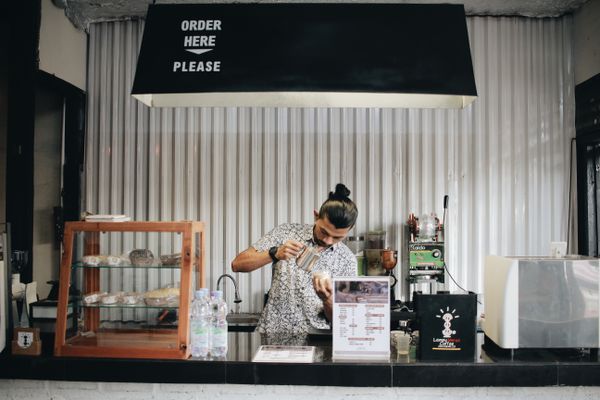
Glad hipster male employee passing glass of Black Velvet cocktail to smiling ethnic colleague at work
Photograph by Tim Douglas via Pexels
Editorial note. Independent reporting and analysis. Nothing here is sponsored or paid for. How we work.

The last customer is not the last task

A counter that closes at five is not a counter that finishes at five. Behind the shutter sits a sequence of end-of-day tasks that has to be completed before anybody leaves, and that sequence has a length which does not vary much with how busy the day was.

This is the source of a common and entirely reasonable irritation: arriving at ten to five and being told the last ticket has gone. From outside it reads as a shop closing early. From inside it is the arithmetic of a fixed closing routine working backwards from a fixed departure, and the answer to when the counter can stop taking work is simply earlier than the door shuts.

Cash and records have to agree

Wherever money changes hands physically, the day ends with a reconciliation. The cash in the drawer is counted and compared against what the system says should be there, and any discrepancy has to be identified before the till is closed off. A difference of a few units means recounting, and recounting means reviewing transactions.

The reason this cannot be deferred is that a discrepancy is only traceable while the day is still fresh and the transactions are still few. Left until tomorrow it becomes a difference of unknown origin across two days of activity, which is a much harder problem and a much more serious one. So the reconciliation is fixed in place, and everything else in the closing routine has to fit around it.

A transaction started at closing does not finish at closing

The other half of the arithmetic is that transactions have durations, and the durations differ enormously. A quick enquiry takes two minutes. An application with identity checks, forms, signatures and a payment might take twenty-five, and it cannot be paused halfway and resumed by somebody else in the morning.

Counters therefore stop accepting work at whatever point makes the longest plausible transaction finish on time. That cut-off is set by the worst case rather than the average, which is why it can feel absurdly early when all you wanted was to hand something over. The person applying it usually cannot tell in advance whether your two-minute job is really a two-minute job, and has been caught out before.

Some cut-offs are set somewhere else entirely

A different class of deadline has nothing to do with the building. Payments handed to a clearing system, documents collected by a courier, applications submitted to a central office and files transferred to another organisation all have cut-off times imposed externally, and those times are frequently well before the counter closes.

This is why you can be served perfectly happily at four and still be told the item will be treated as tomorrow’s. The transaction succeeded; it simply missed a departure. Anything described as same-day is worth asking about specifically, because same-day almost always means before a cut-off that is not printed on the door.

Handover is a scheduled event

Where a counter runs shifts rather than closing, the equivalent constraint is the handover. Drawers are reconciled and reassigned, open cases are summarised, and anything half-finished has to be either completed or written up in a form the next person can act on.

Handovers are the reason a queue can appear to move well and then not move at all for a quarter of an hour. Nothing has broken. Two people are conducting a formal transfer of responsibility, and it cannot be conducted at a counter that is simultaneously serving somebody, because the whole point of it is establishing exactly where the record stood at a known moment.

Which times are real

It is worth learning to distinguish the times an organisation publishes. Opening hours describe when the doors are unlocked. Service cut-offs describe when work can still be started, and are frequently unpublished. Processing cut-offs describe when work still counts as today, and are the ones that matter for anything with a deadline attached.

When something has to happen by a particular date, the only reliable question is which of those three you are being told. Ask what the latest time is that the item will still be processed today, rather than what time they close. They are different questions and, often enough, hours apart.

The same distinction explains why the last hour before closing is such an odd period to be served in. The remaining staff are working through the queue while beginning the tasks that must be finished afterwards, positions come off the counter one at a time rather than all at once, and the mix of work being accepted narrows as the cut-offs pass in sequence. Nothing about it is arbitrary, and almost none of it is announced.

Common questions

Why can they serve the person in front of me but not me?

Because the cut-off is usually applied to the queue at a moment rather than to individuals. Everyone already accepted is inside the estimate the closing routine was built around, and adding one more transaction of unknown length is exactly the risk the cut-off exists to remove.

Is a payment made just before closing counted as that day?

It depends on the processing cut-off rather than the counter time, and the two are rarely the same. The safest approach is to ask directly whether the item will make today’s processing, and to get the answer noted if a deadline turns on it.

Why do queues stall mid-afternoon?

Often a shift handover or a scheduled reconciliation, both of which require a position to stop serving in order to establish a clean record. Break rotas are also staggered deliberately, which reduces the number of open positions for a predictable period rather than randomly.

Behind The Counterclosingreconciliationshiftsprocess
Zoya Rahman
Consumer editor, What Nobody Explains

Zoya has written about behind the counter, paperwork, queues & waiting for most of the last decade and thinks most subjects are more interesting once you know how they work.