Skip to content
The part of the process nobody writes down
What Nobody ExplainsThe part of the process nobody writes down

Paperwork

What happens to a form in the first hour after you hand it over

Between submission and processing sits an intake sequence that decides how long everything afterwards will take.

By Tanmay Ghosh4 min read

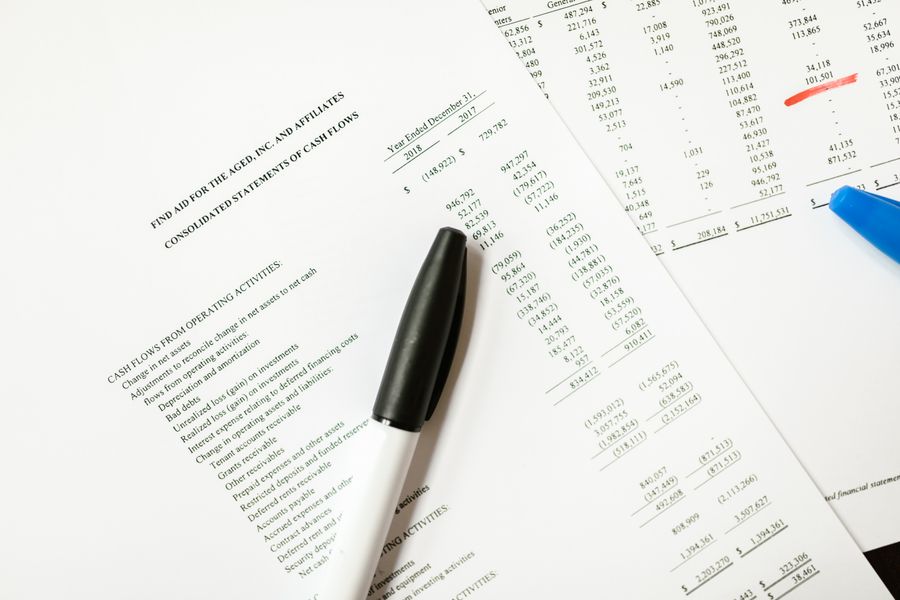
Financial documents featuring cash flows and pens, ideal for business themes and analysis.
Photograph by RDNE Stock project via Pexels
Editorial note. Independent reporting and analysis. Nothing here is sponsored or paid for. How we work.

The handover is not the start of the work

Handing over a completed form feels like the moment the process begins. From the inside it is closer to the moment an item joins a conveyor. Nothing is examined on its merits for some time yet, and the first several things that happen to it are entirely mechanical.

Knowing that sequence is genuinely useful, because most of the delays people attribute to sloth are actually delays at one of these unglamorous early stages. A form that stalls rarely stalls in front of a decision-maker. It stalls before it ever reaches one.

Receipt, and the timestamp that matters later

The first step is acknowledging arrival. In a physical setting this is a stamp, a barcode or a receipt slip; digitally it is a submission record. Whatever the format, it fixes a date and time against the item, and that timestamp is frequently the single most valuable thing produced in the whole hour.

It matters because almost every process downstream measures itself against it. Service targets, deadlines, ordering within a queue and any later argument about whether something arrived in time all refer back to that moment. This is why it is worth insisting on some evidence of submission even when nobody offers one, and why organisations that take forms without issuing anything are creating a problem they will eventually have to solve at their own expense.

Triage decides more than the decision does

Next the item is sorted. Somebody or something reads enough of it to determine which category it belongs to, which team handles that category, and whether it is complete enough to proceed. This is triage, and it is done fast and shallowly, because doing it slowly would simply move the queue rather than shorten it.

Shallow reading has a predictable consequence. Triage is driven by the fields it can see at a glance — the type, the reference, the tick-box on the front page — and not by the paragraph on the back explaining that your case is unusual. A form that describes an exceptional situation in an ordinary category will be routed as ordinary, and then travel a long way before anyone notices. That is the commonest way a case ends up on the wrong desk.

Completeness checking, and the return loop

The item is then checked for whether it can be worked at all. Are the mandatory fields filled, are the required attachments present, does the signature exist, do the dates make sense against each other. This check is deliberately dumb, and it is applied before anyone spends real time on the substance.

If something is missing the item is returned or held, and this is where the largest delays in most processes live. A return is not a pause of a day or two. The item leaves the queue, a letter or message is generated, it waits for your response, and on arrival it re-enters intake — often at the back rather than at the point it left. A single missing attachment can therefore cost weeks, which is wildly out of proportion to the thirty seconds it would have taken to include.

Indexing turns paper into something searchable

Somewhere in the first hour the contents are transferred into a record. Key fields are keyed in or scanned, the item is attached to an existing file if one is found, and a reference is generated. From this point onwards most people handling your case will see the indexed version rather than the original.

This is why legibility is worth more than presentation. A field that cannot be read confidently is either guessed at or queried, and a guess entered into a matching field is exactly how a case joins the wrong record. It is also why the copy of the form you keep is occasionally more complete than the version the organisation is working from, an asymmetry worth remembering if the two later appear to disagree.

Then it queues, and the queue has a shape

Only after all of that does the item wait to be worked. That queue is rarely a simple line. Items are typically ordered by category, by target date, sometimes by complexity so that quick cases can be cleared in bulk, and there is usually a separate stream for anything already returned once.

Understanding the shape explains behaviour that otherwise looks random. Something submitted later than yours can genuinely be completed first, without any queue-jumping, because it landed in a different stream. And chasing rarely reorders anything; what chasing actually does is confirm which stream the item is in, which occasionally reveals that it was routed wrongly at triage an hour after you handed it over.

The last thing worth knowing is that most of these stages leave a status against the reference — received, indexed, allocated, returned, in progress. Those statuses are usually visible to whoever answers the phone even when they are not published anywhere. Asking which status an item currently holds is a much more productive question than asking how long it will take, because the status tells you which of the stages above it is stuck at, and each stage has a different remedy.

Common questions

Does chasing a form speed it up?

Not usually by reordering the queue, since position is generally set by category and target date. It is valuable for a different reason: it confirms the item was received, indexed and routed correctly, and misrouting at intake is one of the few problems that a chase can actually surface early.

Why does a small omission cause such a long delay?

Because incomplete items leave the working queue entirely and re-enter through intake once the missing piece arrives. The cost is not the correction but the two extra passes through the queue, which is why checking attachments before submission repays the effort many times over.

Is a receipt worth asking for?

Almost always. The submission timestamp anchors deadlines, service targets and any later question about when the item arrived, and reconstructing it after the fact is far harder than obtaining it at the counter.

Paperworkformsintakeprocessingworkflow
Tanmay Ghosh
Editor, What Nobody Explains

Tanmay has written about behind the counter, paperwork, queues & waiting for most of the last decade and is happiest when a piece answers the question completely.