Skip to content
The part of the process nobody writes down
What Nobody ExplainsThe part of the process nobody writes down

Queues & Waiting

The person at the door is doing triage, not greeting

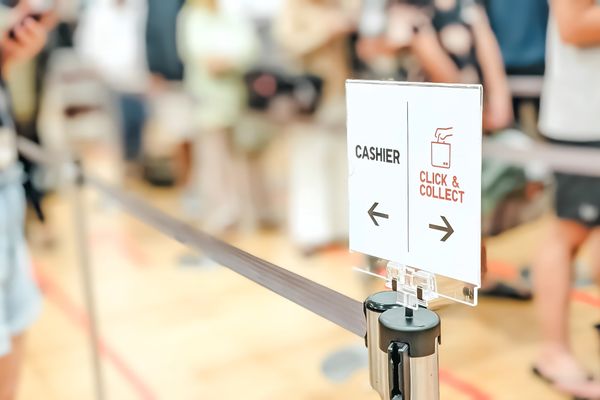
A greeter in a service hall exists to sort arrivals into the right channel before anybody joins the wrong queue, which is where most wasted waiting comes from.

By Zoya Rahman3 min read

A winter city street with people wearing masks, jackets, and a passing car.
Photograph by Konstantin Khrustov via Pexels
Editorial note. Independent reporting and analysis. Nothing here is sponsored or paid for. How we work.

The friendliest role in the building is a sorting function

Somebody standing near the entrance asking what you have come in for is performing the first and cheapest step in the whole operation. Sorting an arrival at the door costs perhaps twenty seconds. Discovering at the counter, after a twenty-minute wait, that the person is in the wrong place costs the wait, the counter time and a second wait somewhere else.

That ratio is why the role exists and why it is often filled by somebody experienced rather than by whoever is spare. Good triage requires knowing the full range of what the site handles, which cases have hidden requirements, and what the alternatives are. It looks like hospitality and it’s closer to routing.

Wrong-queue waiting is the largest avoidable loss

In any service with more than one channel, a portion of the queue does not belong in it. Some need a different department, some need an appointment they do not have, some are missing a document that will stop them at the counter, and some could complete the whole thing on a machine or a website in a fraction of the time.

None of these people are doing anything unreasonable, because the information needed to sort themselves correctly is not available to them. Signage describes departments in institutional language, and a person cannot know that their case requires a document nobody mentioned. Triage exists to supply the missing information at the only moment when supplying it is cheap.

The questions are testing for exceptions

The short sequence of questions at the door isn’t small talk and it isn’t curiosity. Each one is a filter for a known failure. Do you have an appointment separates two populations with different routing. What is it regarding selects a channel. Do you have the document establishes whether the visit can succeed at all.

This is why an answer that is too general gets probed. Sorting has to happen on the category rather than the story, and a long account cannot be sorted because it has not been reduced to anything the routing rules recognise. The probing is a search for the one attribute that decides the destination, and it stops immediately once that attribute appears.

Being turned away at the door is usually a favour

The most valuable outcome of triage is also the least welcome one: being told before joining anything that today will not work. A missing document, a service that moved, a case that must be started online, a specialist available only on certain days. Hearing it at the door instead of at the counter saves the entire wait.

It rarely feels like a saving. It feels like being refused entry, particularly after a journey, and there is a real asymmetry in that: the cost to you is immediate and the benefit is invisible because it consists of a wait you did not have. Worth noticing all the same, because the alternative was the same refusal an hour later.

Where triage fails, and why

It fails in predictable ways. It fails when the person doing it is also doing something else, since interrupted sorting is inaccurate sorting. It fails at peak times, exactly when it is most valuable, because a queue forms for the triage itself. And it fails on genuinely unusual cases, which are the ones where sorting matters most, since routing rules are built around common patterns.

It also fails when the triage question and the customer answer at different levels. A person describing a symptom to somebody sorting by process, or describing a process to somebody sorting by department, produces a routing decision made on a mismatch. The result is a correctly staffed counter, a correctly waiting customer, and a wrong pairing that nobody detects until it is expensive.

Making the twenty seconds work

Lead with the category and the channel: what the matter concerns, whether an appointment exists, and what you have brought. If your case has an unusual feature, say it here rather than saving it, because this is the one point where an unusual feature changes the destination cheaply.

And treat the answer as information rather than as a verdict. Being sent to a machine, a website or another day is a routing decision based on what the site can actually complete today. If it seems wrong, the useful response is to supply the attribute that makes it wrong rather than to argue with the destination, since the destination was derived from what was said.

Common questions

Why does the person at the door ask what my visit is about?

To route it. Sorting an arrival takes seconds while discovering a misdirected case at the counter costs the whole wait, so a brief question at the entrance is the cheapest correction available anywhere in the process.

Is it worth mentioning an unusual detail during triage?

Yes, if it might change where the case goes — a missing document, an unusual circumstance, a previous visit that failed. Routing rules are built around common patterns, and an unusual attribute mentioned at the door is far cheaper to act on than the same attribute discovered later.

Why am I sometimes told to use the website instead?

Because the transaction can be completed there and cannot be completed at the counter today, or because it will be faster. It reads as a brush-off from the doorway, though it usually reflects a genuine difference in what each channel is able to finish.

Queues & Waitingtriagequeuesreceptionservice
Zoya Rahman
Consumer editor, What Nobody Explains

Zoya has written about behind the counter, paperwork, queues & waiting for most of the last decade and thinks most subjects are more interesting once you know how they work.