Skip to content
The part of the process nobody writes down
What Nobody ExplainsThe part of the process nobody writes down

Small Print

The clause that says nothing said beforehand counts

An entire agreement provision draws a line around the document and declares that everything outside it — brochures, emails, conversations — is not part of the deal.

By Amrita Kohli3 min read

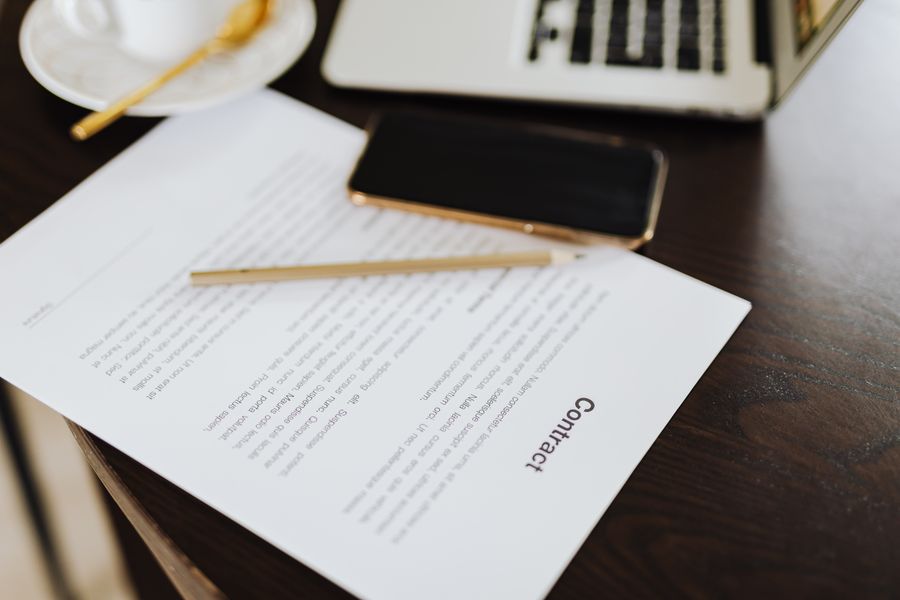
Close-up of a contract with office essentials like a laptop and coffee on a desk.
Photograph by https://kaboompics.com/ via Pexels
Editorial note. Independent reporting and analysis. Nothing here is sponsored or paid for. How we work.

A short paragraph that discards the run-up

Near the end of most formal agreements sits a provision stating that the document constitutes the entire agreement between the parties and supersedes all prior discussions, representations and understandings. It reads like housekeeping. It is one of the more consequential sentences in the document, because it defines the boundary of what the agreement actually consists of.

Everything that happened during the approach to signature — the conversation with a representative, the brochure, the reassuring email, the presentation with the diagram — sits outside that boundary once the clause takes effect. The document becomes the sole account of what was agreed, whatever else was said along the way.

Its purpose is to make the deal knowable

It is easy to read this as a trap, and the underlying reason is more mundane. Negotiations generate an enormous trail of partial statements, superseded drafts and things that were true at the time and stopped being true two revisions later. Without a boundary, any of that material could later be argued to form part of the bargain.

The clause exists so that both parties, and anybody reading afterwards, can point at one document and say that this is the agreement. That certainty is valuable to everyone in principle. It is more valuable in practice to whichever party drafted the document, because they controlled what made it inside the boundary.

Which is why an assurance has to be written down

The practical consequence is direct. If something matters and it was said rather than written, it may well not survive signature, and the remedy is not to remember it better but to get it into the document before signing.

The usual objection is that asking for a verbal assurance to be added is awkward or implies distrust. It is neither, and the request is unremarkable to anybody who deals with agreements regularly. The version of the conversation that will exist in two years is the written one, and this is exactly the clause that makes that so.

The carve-outs at the end of the clause matter

Entire agreement provisions are commonly followed by qualifications, and those qualifications are the most informative part. A clause may exclude prior representations while expressly preserving liability for statements made dishonestly, or it may confirm that certain named documents — a schedule, an order form, a quotation — do form part of the agreement.

Reading the carve-outs tells you what the drafter considered contentious. A clause that lists three documents as included is telling you that those three were negotiated and everything else was not. And where the clause is unusually elaborate, it is generally because somebody once argued about precisely this, and the extra sentences are the scar tissue from that argument.

It interacts with the other machinery at the back

The clause sits in a cluster with several others that together decide how the document behaves: the provision on variations, which controls how it changes afterwards; the one on notices, which decides when anybody was told anything; and the one on the order of precedence between documents, which resolves conflicts between the main terms and the schedules.

They are best read together rather than one at a time, since each is meaningless without the others. An entire agreement clause fixes the boundary at the outset, a variation clause governs movement of that boundary afterwards, and a precedence clause says which part wins where two included documents disagree. That is a complete little system, and it usually occupies less than a page.

How to use it while reading

Two habits help. Before signing, make a short list of everything you are relying on that you have not seen in the document, and check each one against the text. Anything not there is, for practical purposes, not part of the agreement.

And read the list of included documents carefully, because it is common for the substance of the deal — specification, price, service levels — to sit in an attached schedule rather than in the main terms, and for the clause to be the only place that confirms the schedule is included. Where something significant turns on any of this, it is worth proper advice; the clause is a piece of drafting machinery rather than a rule with a single fixed effect, and its reach varies with what surrounds it.

Common questions

Does the clause mean a salesperson’s promise is worthless?

It means the promise is outside the written agreement, which changes its standing considerably. What follows from that depends on the circumstances and on how the clause is drafted, including any carve-outs, so it is not a question a general description can answer for a particular case.

Can I ask for something spoken to be added before signing?

Yes, and it is an ordinary request. Whether it is accepted is a commercial matter, but a refusal to write down an assurance that has just been given verbally is itself useful information about how much weight it was ever meant to carry.

Why does the clause list some documents as included?

Because the substance of many agreements sits in attachments — specifications, order forms, schedules of charges — and the clause is what confirms they are inside the boundary rather than outside it. The list is worth checking against what you were actually shown.

Small Printcontractsclausesdocumentsprocess
Amrita Kohli
Contributing editor, What Nobody Explains

Amrita has been reporting on behind the counter, paperwork, queues & waiting since long before it was fashionable and thinks most subjects are more interesting once you know how they work.