Skip to content
The part of the process nobody writes down
What Nobody ExplainsThe part of the process nobody writes down

Small Print

The signature block is a set of statements, not a space to sign

The lines around a signature record who is signing, on whose behalf and in what role, and each of those is a separate assertion.

By Lukas Brenner3 min read

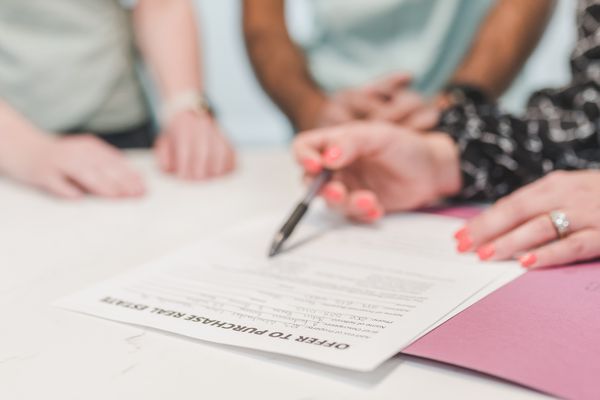
Close-up of hands holding a pen during a business meeting or contract signing.
Photograph by cottonbro studio via Pexels
Editorial note. Independent reporting and analysis. Nothing here is sponsored or paid for. How we work.

More printed lines than signatures

The block at the end of an agreement usually contains far more text than the act it accommodates. Name in capitals, position, the name of an organisation, the words for and on behalf of, a date, sometimes a second line for a witness. None of that is formatting, and none of it is there to fill the drafter’s page. Each line is recording a separate fact that somebody may need to establish later.

The reason the block is so carefully laid out is that the questions it answers are exactly the ones raised when an agreement is disputed. Who signed. In what capacity. For which entity. When. A signature alone answers only the first, and answers it badly.

Capacity is the part people skip

The distinction between signing as yourself and signing for an organisation is the most consequential thing in the block. For and on behalf of, followed by an entity name, says that the person is not a party — the entity is — and that they are acting as its representative. Signing without those words, on a document that intended them, muddies which of the two was committing.

The position line performs a related job. It records the role the signatory occupied at that moment, which is what connects them to whatever authority they were relying on. Roles change, people move on, and the printed title is often the only surviving evidence of what somebody was when they signed.

Authority sits behind the signature rather than in it

Organisations restrict who may commit them, usually by value and by subject, through internal rules that are invisible on the page. The signature block is where those rules meet the document, which is why some agreements require two signatories, or a signatory of a stated seniority, or a separate approval reference written alongside.

This is also why a document can be signed enthusiastically by somebody without producing what either side expected. The relationship between internal authority and the effect of a signature on an outside party is a genuinely legal question that varies by jurisdiction and circumstance, and is not something to settle from a general description. The practical point is narrower: where a document specifies who must sign, that specification is part of the document.

Counterparts explain why nobody meets any more

A clause about counterparts, usually sitting a page or two earlier, says that the parties may sign separate copies and that those copies together make one agreement. It exists because the alternative is physically assembling everybody around a single set of paper, which stopped being practical some time ago.

The clause is what makes the familiar routine legitimate: each side signs its own copy, signature pages are exchanged, and the completed document is assembled from parts. Related wording often permits a scanned or electronic signature page to count. Both provisions are there to remove an argument about whether a document put together in this ordinary way was properly completed.

Dates, and the difference between three of them

The date written beside a signature records when that person signed. It is not necessarily the date the agreement takes effect, which is usually stated in a commencement provision, and it is not necessarily the date on the front page, which may be filled in when the last signature arrives.

Where the dates diverge, the document normally says which one governs, and it is worth finding that sentence rather than assuming. Leaving a date blank is the one part of a signature block that reliably causes trouble later, because a missing date is the piece of information nobody can reconstruct afterwards from anything else on the page.

A short routine at the point of signing

Check that the entity named is the entity you dealt with, since group structures produce very similar names. Check that the capacity line matches what you intend — yourself, or an organisation through you. Complete the date. And if the document names who must sign, make sure the person signing matches the description.

It takes about a minute and it addresses the questions that come up most. Anything beyond that — whether a particular arrangement needs a witness, what formalities apply to a specific type of document, whether an electronic signature is sufficient for a given purpose — depends on where you are and what you are signing, and is exactly the sort of thing worth asking somebody qualified about rather than inferring from the layout of the page.

Common questions

What does for and on behalf of actually add?

It records that the signatory is acting as a representative and that the organisation named is the party, rather than the individual holding the pen. Without it, a document can be ambiguous about which of the two was committing.

Why do some agreements require two signatures?

Because organisations restrict who may commit them, commonly by value or subject matter, and a second signatory is a control built into that internal authority structure. The requirement appears in the document precisely so it can be checked.

What is a counterparts clause for?

It confirms that separately signed copies together form a single agreement, which is what makes the ordinary practice of exchanging signature pages workable. Related wording usually allows scanned or electronic pages to count.

Small Printdocumentssigningcontractsdrafting
Lukas Brenner
Features writer, What Nobody Explains

Lukas has written about behind the counter, paperwork, queues & waiting for most of the last decade and thinks most subjects are more interesting once you know how they work.