Skip to content
The part of the process nobody writes down
What Nobody ExplainsThe part of the process nobody writes down

Small Print

Why every list ends with including but not limited to

The phrase looks like padding and is a deliberate instruction about how the list that follows should be read.

By Anjali Raghunathan3 min read

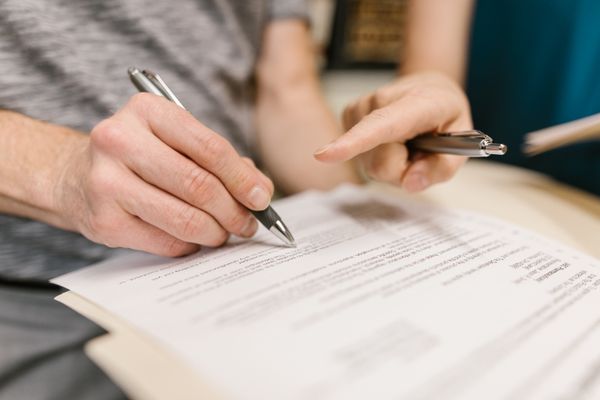
Close-up of businessmen signing documents at a wooden table in an office.
Photograph by Alena Darmel via Pexels
Editorial note. Independent reporting and analysis. Nothing here is sponsored or paid for. How we work.

A phrase that survives every attempt to delete it

Plain-language campaigns have removed a great deal from legal documents over the years, and this phrase has proved remarkably resistant. It reads as filler, it lengthens every sentence containing it, and drafters keep it because it does something specific that its shorter alternatives are not reliably trusted to do.

The job is to tell the reader — and anybody later interpreting the document — whether the list is exhaustive or illustrative. That is a genuine ambiguity in ordinary English, and the consequences of getting it wrong run in both directions.

Lists carry a silent implication

When a document lists several things, a natural reading is that anything not listed was excluded deliberately. If a clause covers fire, flood and storm, the absence of an earthquake looks like a decision. That inference is reasonable, since somebody sat down and chose the items, and it can defeat a clause the drafters believed was general.

Including but not limited to blocks that inference. It converts the list from a definition into a set of examples, so the items illustrate the category rather than constituting it. That single change alters how the whole clause behaves, particularly where the category is broad and the world keeps producing new members of it.

The inference cuts the other way as well, which is why the phrase isn’t simply a device for one side. A reader encountering a long list of examples may conclude that a clause reaches only as far as the items named, and then be startled when it turns out to cover something quite different. Marking the list as open at least tells you honestly that its edges aren’t where the last full stop is, and that the general words above it are the operative part.

Which is why the examples chosen are informative

If the list is illustrative, the choice of examples still carries weight, because examples signal the kind of thing intended. A list running through several items of one obvious type suggests a narrower category than the abstract words alone would imply, and interpretation frequently pays attention to that pattern.

So the practical way to read an illustrative list is as a description of the intended territory. Where the examples are varied and stretch across quite different situations, the drafters were signalling breadth. Where they cluster tightly, the category is probably narrower than the general words suggest, whatever the phrase attached to them says.

The opposite instruction exists too

Some lists are meant to be closed, and careful drafting says so — means the following, comprises, consists of, or an explicit statement that the list is exhaustive. These appear where certainty is more valuable than coverage: the definition of a deliverable, the situations in which a right may be exercised, the categories of permitted use.

Noticing which kind of list you are reading is a fast and useful habit. An exhaustive list is a boundary and can be checked item by item against your situation. An illustrative list is a direction of travel, and something absent from it may still be inside the category. Confusing the two produces the two commonest misreadings of any long document.

Interpretation clauses do the same job in bulk

Many agreements handle this once rather than repeatedly, in the interpretation section near the front. A line stating that any list introduced by including is to be read without limitation applies the rule across the whole document, which is why some long contracts manage to avoid the phrase almost entirely.

That is worth knowing, because a document with such a line reads quite differently from one without it. A bare including in a document containing that provision is illustrative by default. The same word in a document without it is genuinely ambiguous, and the ambiguity sits precisely where the clause was trying to be broad.

Reading long lists efficiently

Nobody needs to read every item in a list of thirty. What matters is the introduction: whether it opens the category or closes it, and whether an interpretation clause elsewhere has already answered the question. Read the first words, sample the examples for their type, and move on.

And treat unusually long lists as a signal rather than as an obstacle. A list that runs on and on generally exists because the drafter wanted no argument about coverage, which tells you that the clause is expected to be contested. Where that clause governs something important to you, that is exactly the point at which a general article stops being useful and a professional reading of the actual wording starts.

Common questions

Why not just write including?

Because a bare list invites the inference that anything unlisted was deliberately excluded, and the longer phrase blocks that reading explicitly. Some documents solve it once in the interpretation section instead, which is why well-drafted long contracts sometimes avoid repeating the phrase at all.

How do I know whether a list is exhaustive?

Look at the words introducing it. Means, comprises, consists of and explicit statements of exhaustiveness close a list, while including, such as and for example open it. Where a document has an interpretation clause covering this, that clause governs throughout.

Do the specific examples matter if the list is only illustrative?

Yes, because examples indicate the kind of thing intended. A tightly clustered set of examples suggests a narrower category than the general words alone would imply, and that pattern is commonly taken into account when the clause is interpreted.

Small Printcontractsdraftinglanguagesmall print
Anjali Raghunathan
Deputy editor, What Nobody Explains

Anjali joined to cover behind the counter, paperwork, queues & waiting and stayed for the awkward questions and reads the small print so you do not have to.