Skip to content
The part of the process nobody writes down
What Nobody ExplainsThe part of the process nobody writes down

Behind The Counter

Why some things still have to be done in person

Almost everything has moved to a form or a phone line, and the handful of steps that resist it fail remotely for four specific reasons.

By Anjali Raghunathan4 min read

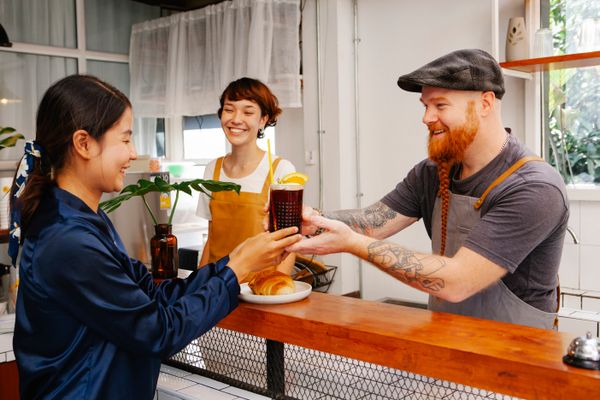
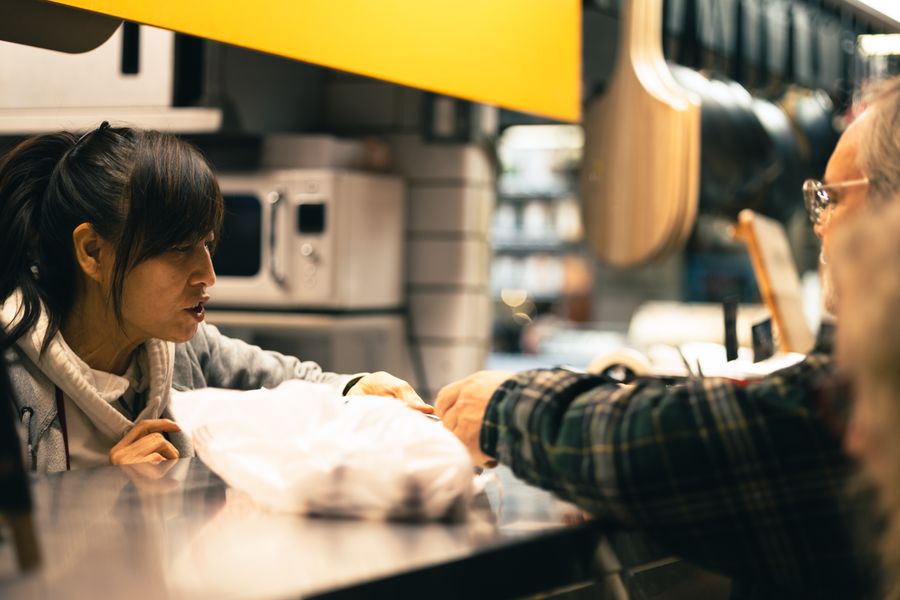
A vendor hands over a product to a customer at a bustling market counter.
Photograph by Owen.outdoors via Pexels
Editorial note. Independent reporting and analysis. Nothing here is sponsored or paid for. How we work.

The residue is small and stubborn

Most errands that once required a visit no longer do. Applications, renewals, payments and changes of address have moved onto forms and phone lines with very little left behind, and the little that remains tends to be described as a legacy of some kind — an office that hasn’t caught up, a rule nobody has bothered to revisit. Some of it is exactly that. Most of it is not.

What survives as an in-person requirement usually survives because one specific step cannot be performed at a distance without losing the thing that made it worth doing in the first place. There are only about four such steps. Once you can name them, you can generally predict which errands will still require a journey in five years and which are quietly on their way out of the building.

Somebody has to look at the original object

The commonest reason is that a document has to be examined rather than read. A photograph of a certificate conveys its contents perfectly well, and conveys almost nothing about the paper: the weight of the sheet, the texture of a raised seal, the way an embedded thread behaves when the page is tilted towards a light. Those features exist precisely because they are awkward to reproduce, and every one of them is destroyed by the act of copying.

A checker trained on genuine documents is therefore being asked to do something a scan cannot support. The check is tactile, it is comparative, and it depends on having handled a great many of the same document before. Where the risk of a convincing forgery is low, organisations accept copies and get on with it. Where it is not low, the original has to be in the room, which means so do you.

A witnessed act needs somebody there to witness it

The second reason is that a process sometimes needs evidence that a particular person did a particular thing at a particular moment, willingly and while understanding what they were doing. Signing in front of a member of staff produces that evidence in a way a signed page arriving by post does not, because the staff member is attesting to the circumstances rather than to the handwriting.

Remote versions of this exist and are spreading. A recorded video call with an identity check attached does much the same job and is now accepted for a good many purposes. But it is worth noticing what the in-person version was actually providing, because it explains why the remote equivalents are specified in such laborious detail. The point was never the signature. The point is a credible account of the few minutes around it.

Physical things have to change hands

Third, and most mundanely, some transactions involve an object. A card is handed over, a key collected, a sample given, a device inspected, a photograph taken under controlled lighting against a plain background. Posting the object is often possible and is a genuine substitute, but it introduces a gap during which the item is neither with you nor with them. For anything that opens a door or reaches money, that gap is the entire problem.

This category shrinks steadily as objects turn into records. A ticket that used to be a piece of card is now a number, and the window that issued the card has closed. Where the object still matters, it is usually because the object is the credential itself rather than a token pointing at one held elsewhere.

Occasionally presence is the check

The fourth reason is the one people find least intuitive: sometimes attending is not a means of doing something else but is itself the thing being tested. A process that has to establish that a person is alive, is in a particular country, or can reach a particular building on a particular day has few remote substitutes that are hard to arrange dishonestly.

It is a blunt instrument, and it is generally acknowledged as one, because it falls heaviest on the people least able to travel. That tension is real and nobody resolves it by pretending otherwise. Most organisations keeping such a requirement also run an exception route for those who cannot meet it, and how easy that route is to find tells you roughly how firmly they believe in the rule.

Reading an in-person requirement

When a visit is unavoidable, it is worth working out which of the four it is for, because the answer decides what to bring and what happens if you bring the wrong thing. An appointment for document inspection fails completely without the original, whatever else is in the folder. One for a witnessed signature fails without acceptable identification. One to hand something over is finished in ninety seconds.

And where a requirement seems to serve none of these purposes, it is quite often a survival — a step designed around a paper file that no longer exists, kept in place because nobody has had cause to look at it. Those do get removed in the end. They tend to go when somebody is asked to justify them in writing, which is a slower mechanism than complaining and a considerably more reliable one.

Common questions

Why is a scan accepted by one department and refused by another?

Because they are checking different things. A department reading the contents of a document can work from an image, while one satisfying itself that the document is genuine needs the physical features that copying removes.

Are video identity checks equivalent to attending in person?

For many purposes they are now treated as equivalent, and the rules around them are detailed for that reason. They reproduce the account of the moment rather than the handling of the paper, so they substitute well for witnessing and less well for inspection.

What if travelling to an appointment is not possible?

Most services that keep an attendance requirement also operate an alternative route, though it is often not advertised alongside the main one. Asking specifically what the visit is intended to establish tends to surface it faster than asking for the rule to be waived.

Behind The Countercountersverificationappointmentsservice
Anjali Raghunathan
Deputy editor, What Nobody Explains

Anjali joined to cover behind the counter, paperwork, queues & waiting and stayed for the awkward questions and reads the small print so you do not have to.