Skip to content
The part of the process nobody writes down
What Nobody ExplainsThe part of the process nobody writes down

Paperwork

Why proof of address is a separate category from proof of identity

The two document lists answer different questions, which is why a passport that settles who you are proves nothing about where you live.

By Lukas Brenner4 min read

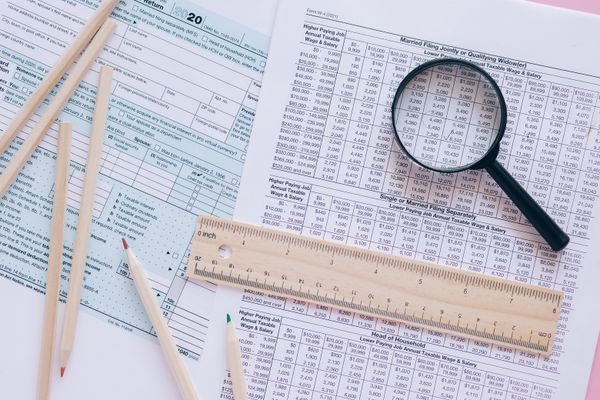
A close look at tax forms marked with scam, highlighting financial fraud risks.
Photograph by Leeloo The First via Pexels
Editorial note. Independent reporting and analysis. Nothing here is sponsored or paid for. How we work.

Two questions that only sound like one

Somewhere near the start of most account-opening processes sits a pair of lists, and the reason there are two of them is that they answer different questions. The first asks whether the person in front of the organisation is the person they claim to be. The second asks where that person can be found. A document can settle one of those and be entirely silent on the other, which is why the passport that establishes your identity beyond argument is refused as evidence of your address.

The confusion is understandable, since both lists are collected in the same conversation and both are described vaguely as identification. But they are being read for different properties, and a document that is excellent evidence of one is frequently useless evidence of the other.

What makes something good evidence of identity

Identity documents are trusted according to how hard they are to obtain fraudulently and how strongly they bind a name to a person. Photographs, biometric features, tamper-resistant materials and a demanding application process all raise a document up the hierarchy. The strongest documents are typically issued by a state after an examination of other evidence, which means their strength is partly borrowed from the checks that preceded them.

Because they are expensive to produce and expensive to replace, identity documents also last a long time. That durability is exactly what makes them poor evidence of where somebody currently lives. The address inside a document valid for ten years may be a decade out of date and the document remains perfectly valid, since the address was never the point of it.

Address evidence is trusted for the opposite reasons

What makes a document good evidence of address is that a third party sent something to that address recently and expects a response. A bill, a statement, a notice about a local charge — the value lies in the existence of an ongoing relationship maintained at that location, and in the recency of the contact.

This is why the accepted list looks so unglamorous next to the identity list. Nobody thinks a utility bill is a secure document; it is trivially easy to produce something that resembles one. Its evidential value comes from the pattern rather than from the paper, which is also why organisations increasingly check the address against reference databases rather than reading the document at all. The paper is becoming a formality attached to a check happening elsewhere.

The recency rule is doing real work

Almost every address list carries a time limit, commonly a few months. It is the most complained-about condition on the whole page and it is the condition that carries the meaning. An old bill proves somebody lived there once, which nobody doubts and nobody asked. The window is what converts the document into a statement about the present.

It also explains the specific awkwardness of documents that arrive annually. A statement issued once a year spends most of its life outside the window and is therefore acceptable for a few weeks and refused for the rest, despite being the same document throughout. Nothing about it changed; the question being asked has a time dimension and the document does not.

Why a document rarely counts twice

A common instruction is that the same document cannot satisfy both lists, and another is that two documents from the same source will not do. This is not pedantry. Two documents from one issuer represent one check performed once, so accepting both would let a single point of failure look like two independent confirmations.

Independence is the whole principle. The lists are trying to accumulate evidence from sources that would have to fail separately, and a set of documents all deriving from one original registration is a chain rather than a set. That is why an organisation can hold four pieces of paper from you and still ask for a fifth from somewhere else entirely.

Assembling a set that will pass first time

Read the two lists as the two questions rather than as a shopping list, and choose deliberately: one strong photographic document for identity, and one recent, externally generated document for address, from a different issuer. Check the date on the address document before you leave rather than after you arrive.

Where an ordinary set is impossible — a recent move, no bills in your name, a household where everything is in somebody else’s — most organisations maintain an alternative route, and it exists precisely because the standard lists exclude a predictable slice of perfectly ordinary people. It is usually not advertised on the main page. Asking what alternative evidence is accepted is a specific question with a specific answer, and it works far better than presenting a document that was never on the list and hoping.

Common questions

Why is a passport not accepted as proof of address?

Because it is not evidence about where you currently live. Identity documents are built to last for years, so any address associated with one may be long out of date, while address evidence is trusted precisely because it is recent and generated by a third party who contacts you there.

Why must the address document be recent?

The time limit is what makes it a statement about the present rather than about the past. Without a window, an old document would only establish that you lived somewhere at some point, which is not the question the check is asking.

What if I genuinely have nothing on the standard list?

Most organisations hold an alternative evidence route for people who have recently moved, live in shared or supported accommodation, or have no bills in their own name. It is rarely published prominently, so the practical step is to ask directly what alternatives are accepted rather than to substitute a document of your own choosing.

Paperworkidentitydocumentsverificationpaperwork
Lukas Brenner
Features writer, What Nobody Explains

Lukas has written about behind the counter, paperwork, queues & waiting for most of the last decade and thinks most subjects are more interesting once you know how they work.