Skip to content
The part of the process nobody writes down
What Nobody ExplainsThe part of the process nobody writes down

Queues & Waiting

Why being called is rarely the end of the waiting

Most services are several stages long, each with its own queue, and the number displayed on the screen measures only the first of them.

By Anjali Raghunathan3 min read

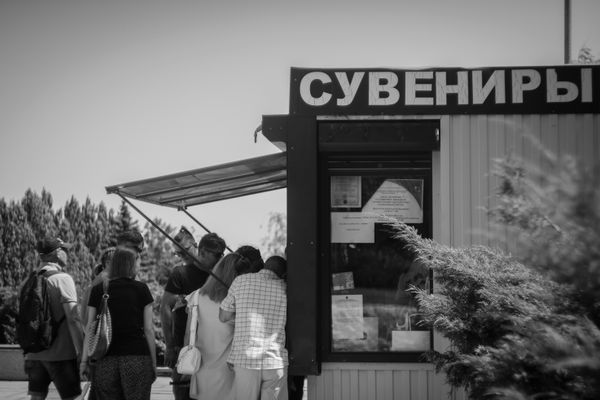
A large crowd of tourists lines up in sunny St. Peter's Square, showcasing architectural columns.
Photograph by Виктор Соломоник via Pexels
Editorial note. Independent reporting and analysis. Nothing here is sponsored or paid for. How we work.

One visit, several queues

A visit that looks like a single wait followed by a service is frequently a chain: wait, check in, wait again, be seen, wait for something to be produced, collect it. Each of those waits is a queue in its own right with its own capacity and its own variability, and only one of them is usually visible on any screen.

This explains the peculiar experience of being called promptly and leaving two hours later. Nothing went wrong. The measured wait ended exactly when it was supposed to, and the unmeasured ones behind it did what they always do. The stages were always there; what varies is which of them anybody has thought to display.

Why services split into stages at all

Stages exist because the skills and the equipment needed at each point are different, and because separating them lets the scarce parts be used continuously. A short registration step performed by one person feeds a longer step performed by somebody who costs more to have idle. Splitting keeps the expensive resource busy.

The trade is a queue at every join. A chain of stages will always have a line in front of the slowest one, and pushing more people through the fast early stage does not help — it simply relocates the wait to somewhere less visible. A hall that seems to check people in with great efficiency and then leaves them sitting is usually a hall where the second stage is the constraint.

The waits in the middle are the ones nobody counts

Published waiting times almost always measure the interval from arrival to first contact, because that is the stage where somebody is standing about looking at a screen and it is the stage everybody complains about. It is also the easiest to instrument, since both ends of it produce a system event.

Downstream waits are harder to measure and are frequently not measured at all. There is often no event marking the moment a case starts waiting for a second stage, so the time simply does not appear in any figure. When the total experience is much worse than the published figure and nobody is being misleading, this is usually where the difference is sitting.

Being called is a handover, not a start

The moment your number appears is a transfer of responsibility rather than the beginning of the work. At that point the case moves from a pool nobody owns into the hands of a person, and the useful consequence is that from then on somebody can tell you what is happening. Before it, nobody could, because nobody had looked at your case.

It is worth using that. The first contact is the only reliable opportunity to ask how many stages the visit contains and where the waiting happens, and the person in front of you knows the answer precisely. Asked at the door, the same question gets an honest guess. Asked at the desk, it gets the actual shape of the afternoon.

Batching at the join, and why several are called at once

Some stages call people in groups: a set of arrivals brought through together, a cohort moved to a second room, a batch of applications taken away and processed as a block. Grouping reduces the cost of switching between people and is standard wherever the setting-up takes longer than the task.

From inside the group it looks like being called and then abandoned, because the call marks the start of the batch rather than the start of your item. The last person in a batch of eight waits for seven others while the screen shows them as being served. Nothing is broken, and the display isn’t lying. It is describing the batch, and the batch is the unit the system actually manages.

Reading a multi-stage service from outside

The signs are visible if you look for them. Seating in more than one area, a second set of doors, staff who take a name and disappear, a hatch marked collection: each of those marks a join between stages and therefore a queue that the entrance display knows nothing about.

And the single most useful question on arrival is not how long the wait is but how many steps the visit has. It converts an unbounded wait into a bounded sequence, which changes what you can plan around. It also produces an answer people can give with confidence, because the number of stages is a fact about the building while the length of the wait is a forecast.

Common questions

Why was I called quickly and then still there for hours?

Because the displayed wait usually measures only the first stage. Subsequent waits between stages are rarely instrumented and often not published, so they do not appear in any figure while occupying most of the visit.

Why do they call several people at once?

Because some stages are cheaper to run as batches, where the preparation costs more than the individual task. The call marks the start of the batch rather than the start of your item, so the last person in the group waits for the rest.

What is the most useful thing to ask on arrival?

How many stages the visit involves. It is a fact about the process that staff can answer confidently, and it turns an open-ended wait into a sequence you can plan around.

Queues & Waitingqueueswaitingmeasurementservice
Anjali Raghunathan
Deputy editor, What Nobody Explains

Anjali joined to cover behind the counter, paperwork, queues & waiting and stayed for the awkward questions and reads the small print so you do not have to.