Skip to content
The part of the process nobody writes down
What Nobody ExplainsThe part of the process nobody writes down

Queues & Waiting

What being sent away with a time actually does to your place

Deferral converts a position in a line into an appointment, and the two are held by completely different mechanisms with different failure modes.

By Zoya Rahman3 min read

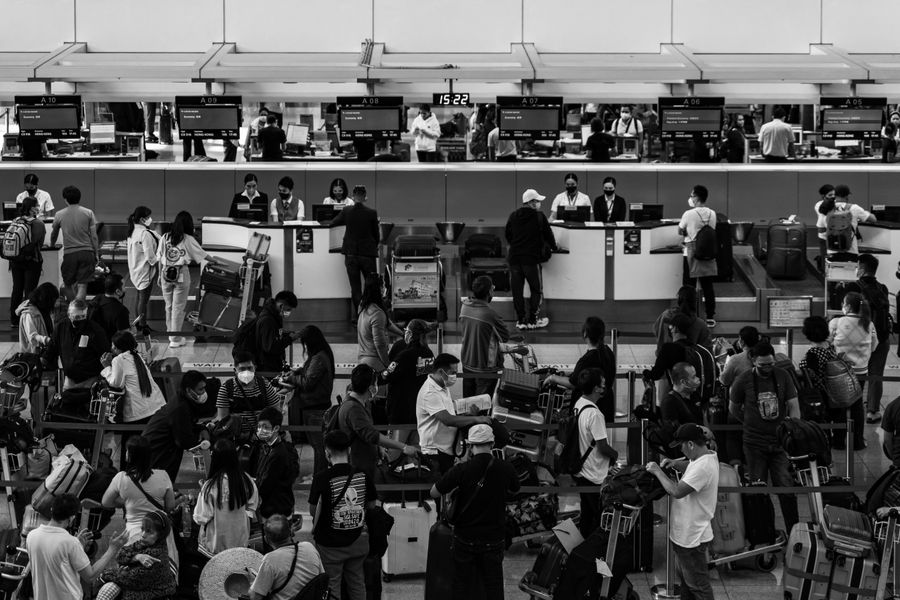
Black and white photo capturing a crowded airport check-in area filled with passengers and staff.
Photograph by Earl Andre Roca via Pexels
Editorial note. Independent reporting and analysis. Nothing here is sponsored or paid for. How we work.

Come back at three is a transaction

Being told to return later feels like being sent to the back of something, and it is usually the opposite. What has happened is that a place in a line, which is held by standing in it, has been exchanged for a place in a schedule, which is held by a record. That exchange is real and it is generally advantageous. It is also fragile in ways the original was not.

The fragility comes from the fact that the two forms of place-holding are maintained by different things. A physical position is maintained by everybody who can see you. A deferred position is maintained by whatever was written down, and if nothing was written down it is maintained by one person’s memory of a conversation.

Deferral exists because the constraint is somewhere else

Being asked to come back is almost always a symptom of a resource that is not the counter. A document has to be retrieved, a colleague with a particular permission is unavailable until later, a system is in a state that prevents the transaction, a piece of equipment is in use. Nothing about the queue is the problem, so holding your position in the queue would achieve nothing.

This is why the time you are given is often oddly specific. It is not an estimate of how long the queue will be. It is the moment the missing resource becomes available, and the queue at that moment is a separate question that nobody has yet thought about. The two frequently collide, which is the source of most disappointment on returning.

What you should be holding when you leave

The useful distinction is between being told to come back and being given something. A ticket, a reference, a note of the name, a time written down: any of these converts a spoken arrangement into a record that survives a shift change. Without one, your return depends on the same person being present and remembering, and neither is safe to assume.

It is entirely reasonable to ask what will exist to prove the arrangement, and staff are rarely surprised by the question, because they know how the afternoon works. Where the answer is that nothing will exist, that is worth knowing in advance rather than discovering at the counter later.

Returning is a different kind of arrival

On the way back you are usually neither an appointment nor a walk-in, which is precisely the difficulty. Systems handle both of those cleanly and often handle the third case by convention rather than by design, which is why returning customers are sometimes told to rejoin the line and sometimes taken straight to a desk.

Where the deferral was recorded properly the returning arrival behaves like an appointment: it has a time, a name and a claim. Where it was not, it behaves like a fresh arrival with a story attached, and the person greeting you has no way of distinguishing that story from any other. This is not scepticism about you. It is an absence of anything to check.

Deferral is doing real work for the service too

From the operational side, sending somebody away is a way of removing an unservable case from the queue. A case that cannot be completed today occupies a position and produces no throughput, and while it stands there everybody behind it waits for nothing. Deferral converts an unproductive wait into a productive one for everybody except the person deferred.

That is a genuine efficiency and it is also the reason deferral can be overused. A service under pressure has an incentive to defer anything difficult, and the cost of doing so falls entirely outside the building where nobody measures it. Most organisations know this. It is one of the harder things to see in their own numbers, because a deferred case looks like a completed interaction.

Making the return worth the journey

Two questions do most of the work before you leave. What exactly will be available when I come back, and what happens if it is not — because a return that depends on the same missing thing simply repeats the morning. And what should I bring, since a surprising share of deferrals are really requests for a document phrased as a request for a time.

On returning, saying immediately that you were asked to come back, and by whom, does more than it sounds like. It routes you as a continuation rather than as a new arrival, and continuation is a category most services treat generously. It is the closest thing there is to the place you gave up.

Common questions

Do I keep my place if I am told to come back later?

Not in the physical sense, since the position was held by standing in it. What you have instead is a scheduled return, and how well it holds depends entirely on whether anything was written down.

Why give me a time and then make me wait again?

Because the time usually marks when the missing resource becomes available rather than when the queue will be short. The two are decided separately, and they often collide at the moment you return.

What should I ask for before leaving?

Something that records the arrangement — a reference, a note, a name and a time — and confirmation of exactly what will be available on your return. Both questions are ordinary and both prevent the same afternoon happening twice.

Queues & Waitingqueueswaitingappointmentscapacity
Zoya Rahman
Consumer editor, What Nobody Explains

Zoya has written about behind the counter, paperwork, queues & waiting for most of the last decade and thinks most subjects are more interesting once you know how they work.