Skip to content
The part of the process nobody writes down
What Nobody ExplainsThe part of the process nobody writes down

Behind The Counter

Opening hours are an arithmetic problem before they are a choice

Published hours are the output of a rota, and the rota is solving for coverage, breaks and demand rather than for convenience.

By Zoya Rahman4 min read

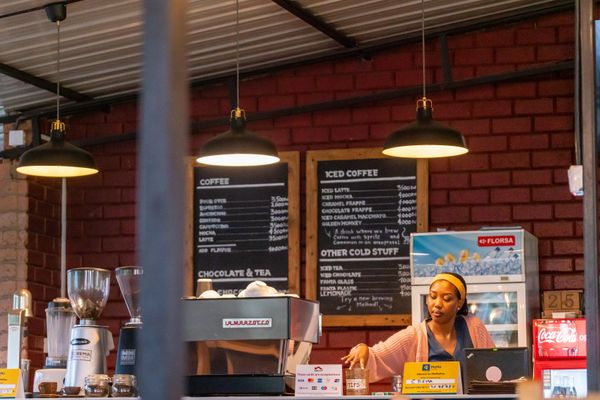
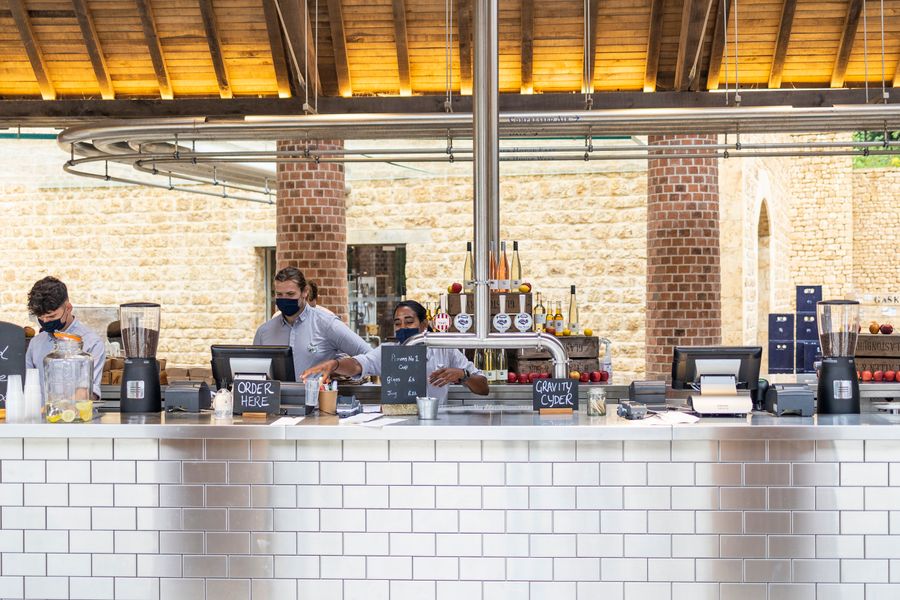
Employees at a modern cafe counter serving customers while wearing masks, indoors.
Photograph by James Frid via Pexels
Editorial note. Independent reporting and analysis. Nothing here is sponsored or paid for. How we work.

Hours are derived, not selected

Opening hours look like a policy decision and are mostly an arithmetic result. Somebody has a number of staff, a set of contracted hours, a legal framework governing breaks and rest, a pattern of demand, and a requirement that certain positions never be left uncovered. The hours on the door are what falls out when those constraints are satisfied simultaneously.

Understanding that changes how the odder patterns read. A branch closing at an unusual time, a service that opens late on one day of the week, a counter that shuts for an hour in the middle of the day — these are rarely preferences. They are the visible edges of a rota that has run out of people at that moment.

Coverage is the constraint that shapes everything

A staffed position isn’t the same as a member of staff. A position that must be covered from opening to closing needs more than one person to cover it, because nobody works the full span without a break, and somebody has to be there during that break. The arithmetic compounds quickly: two positions covered across a long day, with breaks, holiday and sickness allowed for, can require a surprising headcount for what looks like two chairs.

When the numbers do not work, something has to give. Either the span shortens, or the number of open positions varies through the day, or a service closes for a period. Most organisations choose the second, which is why the count of open counters at four in the afternoon differs from the count at eleven in the morning while the published hours stay the same.

Demand is not flat, and the rota chases its shape

Footfall and call volume follow reasonably stable curves. There is usually a rise after opening, a peak, a dip around the middle of the day that is partly the customers going to lunch and partly the staff doing so, and a second smaller rise later. Weekly and monthly patterns sit on top of that, driven by paydays, deadlines and the simple fact that people deal with errands on particular days.

A good rota matches staffing to that curve rather than spreading it evenly, which is efficient and produces a specific unfairness. If you arrive during a trough you will be served immediately by what looks like an over-staffed hall. Arrive at a peak, when staffing is also at maximum, and you will wait — because the peak is by definition the point at which the curve outruns whatever coverage was affordable.

The back-office hours have to come from somewhere

Almost every service has work that cannot be done while serving. Cases raised at the counter need completing, correspondence needs answering, checks need performing, training happens. That time must exist in the week, and there are only two places to put it: outside the opening hours, or inside them by closing something.

This is the usual explanation for the appointment-only afternoon, the mid-week closure, the phone line with narrower hours than the building. It is also why extending opening hours without adding staff tends to degrade everything rather than to improve access. The processing time doesn’t disappear when the door stays open; it simply moves to a place where it competes with serving people, and cases start to age.

One late evening, and why it is exactly one

The single weekly late opening is close to universal and follows directly from the constraints above. It offers access to people who cannot attend during standard hours, it can be staffed by shifting a small number of people rather than by hiring, and it is infrequent enough to be remembered as a fixed feature.

Two late evenings would need close to double the shifted hours, and the earlier part of those days becomes thinly covered as a result. Saturday opening has the same shape and a steeper cost, since weekend coverage often carries premium rates and reduces the pool of staff willing to work it. When a service offers weekend hours for some functions and not others, that is nearly always about which specialists could be persuaded onto the rota.

Reading published hours properly

Treat the hours on the door as the span during which the building is open, not as the span during which everything inside it is available. Separate figures often exist for the last time a new enquiry can be started, for particular services within the same premises, and for the telephone line, which is frequently staffed from a different rota entirely.

Where a service publishes them, the quiet periods are worth more than the headline times. A page describing the busiest hours is describing a real, measured demand curve, and choosing a trough is the one lever available to you that reliably works.

Common questions

Why do fewer counters open at some times of day even though the branch is open?

Because staffing is planned against a demand curve and against break coverage rather than held constant. The published hours describe the span the premises are open; the number of staffed positions inside that span varies by design.

Why is the phone line open for different hours than the building?

Telephone teams are usually rostered separately, often serve several sites at once, and are not tied to the premises. That makes their hours a separate arithmetic problem with a different answer, which is why the two sets of times rarely align neatly.

Is arriving right at opening a good strategy?

Frequently yes, because the queue that formed before opening is finite while the day builds afterwards. The caveat is that some systems are still completing overnight processing early on, so a transaction depending on updated records may go more smoothly slightly later.

Behind The Counteropening hoursstaffingrotasprocess
Zoya Rahman
Consumer editor, What Nobody Explains

Zoya has written about behind the counter, paperwork, queues & waiting for most of the last decade and thinks most subjects are more interesting once you know how they work.