Skip to content
The part of the process nobody writes down
What Nobody ExplainsThe part of the process nobody writes down

Behind The Counter

The self-service machine moved the work rather than removing it

Automating a counter transfers effort to the customer and concentrates the exceptions, which is why the remaining staffed positions look so much busier.

By Amrita Kohli3 min read

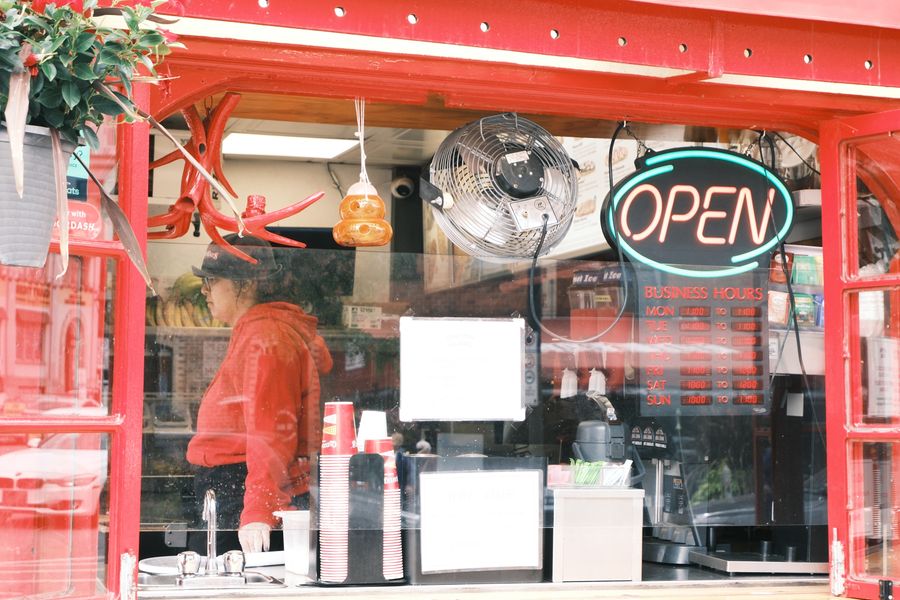
Vibrant red café shopfront with neon open sign, showcasing a bustling interior.
Photograph by Afeez Adeleke via Pexels
Editorial note. Independent reporting and analysis. Nothing here is sponsored or paid for. How we work.

Automation redistributes labour before it reduces it

A self-service terminal does not make a task disappear. It moves the parts a customer can perform onto the customer, keeps the parts requiring authority or judgement inside the organisation, and adds a new task that did not exist before: supporting people through the interface. The total quantity of work often falls, sometimes considerably, but never by as much as the visible staffing change suggests.

This is why a hall full of machines with one member of staff standing among them can feel busier than the row of counters it replaced. The staffed role has become a roving one covering many transactions at once, and it is interrupted constantly rather than occupied sequentially. Both arrangements are work. Only one of them looks like it from the outside.

Machines are built around the median case

Interfaces are designed for the transaction that occurs most often, because designing for the rare case would make the common one slower for everyone. The result is a system that handles the straightforward journey beautifully and falls off a cliff at the first deviation.

Notice how the deviations cluster. Anything involving an identity check that requires a human eye, anything with a physical object of uncertain condition, anything where a rule permits discretion, and anything where two transactions have to be combined. These are precisely the cases the machine refuses, and the refusal is usually the correct behaviour rather than a failure. A terminal that guessed in an ambiguous case would create a problem far more expensive than the queue it avoided.

The exception rate is the entire design problem

Every self-service deployment lives or dies on what proportion of attempts complete unaided. At a high completion rate the arrangement works and the roving assistant is genuinely spare capacity. A few percentage points lower and the same assistant is permanently occupied, the machines idle while people wait for help, and throughput drops below what the old counters managed.

That threshold explains a lot of otherwise puzzling behaviour, including the apparent enthusiasm for guiding customers towards the machines. Getting a straightforward transaction onto a terminal protects the staffed position for the transaction that genuinely needs it. Whether it feels that way from the queue is another question, and the honest answer is that it often doesn’t.

Verification and physical objects are where terminals stall

Two categories defeat nearly every unattended system. The first is verification that depends on judgement — comparing a face to a photograph, deciding whether a document has been altered, satisfying a rule that requires a person to have looked. Machines can assist with all of these and usually aren’t permitted to conclude them alone.

The second is anything physical whose condition varies. A worn card, a damaged note, an item that will not scan, a weight that does not match what the system expected. The sensors exist to detect problems rather than to resolve them, so their entire vocabulary is refusal. It is a narrow instrument being asked a broad question, and the mismatch is structural.

The staffed counter that remains is a harder counter

When routine transactions migrate, what is left at the staffed position is the residue: the exceptions, the disputes, the cases that failed elsewhere, and the people for whom the machine was never going to work. Average handling time at that counter rises sharply, because the easy work that used to sit between the hard cases has gone.

This has an unfortunate side effect on how the wait looks. A short line at a staffed desk can move far more slowly than a long line at a bank of terminals, since every case in it is a case somebody has already tried and failed to complete another way. Judging a queue by its length was always unreliable, and in a self-service hall it is close to meaningless.

Choosing a channel on purpose

The practical reading is to sort your own transaction before joining anything. If it is a standard action on a standard record with nothing unusual attached, the machine will almost certainly be faster and the staffed desk offers no advantage. If it involves an exception, a document, a discretion or a correction to something already recorded wrongly, the machine will consume several minutes and then send you to the desk anyway.

And if the terminal has already refused once, it will refuse again. The rules are the same at every unit, so trying a second machine is one of the few genuinely wasted moves available in a service hall.

Common questions

Why does a staffed counter often move slower than the machines?

Because routine transactions have migrated to the terminals, leaving the counter with exceptions, corrections and cases that failed elsewhere. Each of those takes longer than the average transaction used to take, so the same number of people takes considerably more time to clear.

Is it worth trying a second machine after one refuses?

Almost never. The rules and the record are shared, so an identical attempt produces an identical refusal. The only exception is a fault in the specific unit, which usually announces itself as an error rather than as a rejection of your transaction.

Why do staff encourage people towards self-service so persistently?

Because the arrangement only works above a certain rate of unaided completion, and every straightforward transaction moved to a terminal preserves a staffed position for a case that genuinely requires one. It reads as pressure from the queue, which is a fair reaction to a design that depends on it.

Behind The Counterself-serviceautomationcountersprocess
Amrita Kohli
Contributing editor, What Nobody Explains

Amrita has been reporting on behind the counter, paperwork, queues & waiting since long before it was fashionable and thinks most subjects are more interesting once you know how they work.