Skip to content
The part of the process nobody writes down
What Nobody ExplainsThe part of the process nobody writes down

Paperwork

The paper trail a parcel leaves behind

A delivery generates three or four separate records with different authors, and knowing which one says what explains why a missing item is so hard to argue about.

By Nikhil Bose4 min read

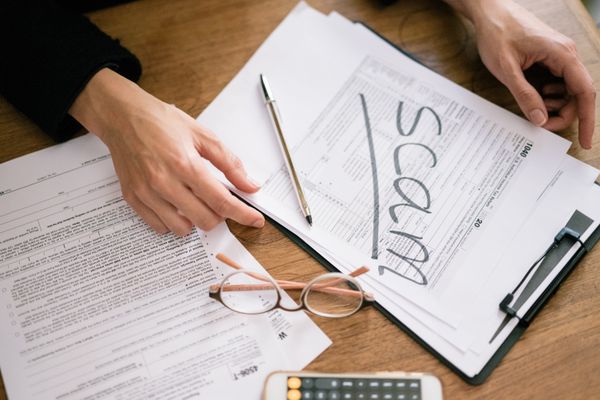
Tax documents and a note suggest tax planning and assistance needs.
Photograph by Nataliya Vaitkevich via Pexels
Editorial note. Independent reporting and analysis. Nothing here is sponsored or paid for. How we work.

One journey, several documents

A parcel arriving at a door looks like a single event. Behind it sit several documents produced at different moments by different parties: a note describing what was sent, a label describing where it is going, a series of scans describing where it has been, and a record of who took it at the end. They are written for separate purposes and they are not copies of each other.

Most disputes about a delivery are really disputes about which of these documents answers the question being asked. The scan history is excellent evidence of movement and says nothing about contents. The dispatch note describes contents and says nothing about whether they arrived. Reading each one for what it was built to record is the whole of it.

The consignment note describes the sender’s claim

Whatever it is called — dispatch note, packing list, delivery note — the document travelling with the goods is a statement by the sender about what has been sent. It exists so that the recipient can check the shipment against something, and so that a shortage can be located rather than merely asserted.

It is worth noticing that this document is written before the parcel leaves. It records what was meant to be packed, which is the strongest evidence available and is still a claim rather than an observation. That is precisely why the checking step at the other end exists, and why the two together are far more useful than either alone.

Tracking events are scans, not sightings

A tracking history is a series of timestamps generated when a barcode passes a reader. Each entry means that a label was read at a location, which is a narrower fact than the plain-language description attached to it. Items are scanned into vehicles, into depots, onto rounds, and each scan writes a line.

This explains the behaviour that looks like error. A parcel can appear to travel away from its destination because sorting is done by hub rather than by geography. It can sit unchanged for a day because the next scan point is the next morning rather than because nothing moved. And an unscanned parcel is not necessarily a lost one; it is one whose label was not read, and the two are easy to confuse from outside.

A signature on receipt attests to less than people assume

Signing for a delivery records that a person of that name took possession of a package at that time and place. It is a statement about custody. It is not, in itself, a statement that the contents were correct, undamaged or complete, because the person signing has generally not opened anything and could not have.

This is why carriers and senders treat receipt and condition as two separate questions, and why the advice to note a problem at the point of signing keeps appearing. A note on the receipt — packaging damaged, one carton short — attaches an observation to the moment of handover, and an observation made later is harder to place in time. Where nothing can be checked at the door, writing that the item was received unexamined is a fair description of what actually happened.

Photographs and safe places changed what the record is

A great deal of delivery now ends without a person. The record becomes a photograph, a location description, or a code entered at a locker, and each of those answers a slightly different question from a signature. A photograph establishes that a parcel was placed somewhere at a time. It establishes nothing about what happened in the following hour.

That gap is the reason instructions left in advance matter so much more than they used to. An instruction is the one part of this trail written by the recipient, and it converts a driver’s judgement into a recorded arrangement. It is a small thing, and it is the only document in the whole sequence where your account of the delivery appears before the delivery does.

Which document to quote when something goes wrong

For a missing item inside a delivered parcel, the packing list is the document that matters, because the question is what was sent. For a parcel that never arrived, the scan history is the document, because the question is where it stopped. For damage, the receipt note and a photograph taken on the day carry the weight, because the question is when the damage became visible.

Quoting the wrong one is why enquiries stall. A perfectly good tracking screenshot cannot answer a question about contents, and a packing list cannot answer a question about arrival. The trail is unusually complete by the standards of ordinary paperwork. It is simply divided between several authors, none of whom was recording the thing you now need to know.

Common questions

Does a signature mean I accepted the contents were fine?

Generally it records that somebody took possession at a time and place, rather than that the contents were checked. Noting visible damage or a shortage at the point of signing, or writing that the item was received unexamined, keeps the two questions separate.

Why did tracking show my parcel moving further away?

Because sorting networks route by hub rather than by distance, so an item often travels to a sorting centre before heading towards you. The scan describes where a label was read, not the direction of travel.

A parcel has not updated for two days — is it lost?

Not necessarily. Tracking updates only when a barcode is read, and long gaps occur between scan points, particularly over weekends and at handovers between carriers. A missed scan and a missing parcel look identical from outside.

Paperworkdeliveriesrecordsdocumentsevidence
Nikhil Bose
Reporter, What Nobody Explains

Nikhil writes the explanatory pieces on behind the counter, paperwork, queues & waiting and would rather show the working than assert the conclusion.