Skip to content
The part of the process nobody writes down
What Nobody ExplainsThe part of the process nobody writes down

Paperwork

Why you are asked to declare the same facts again a year later

Records decay quietly, and periodic re-declaration is the only mechanism most organisations have for finding out which parts of your file stopped being true.

By Lukas Brenner3 min read

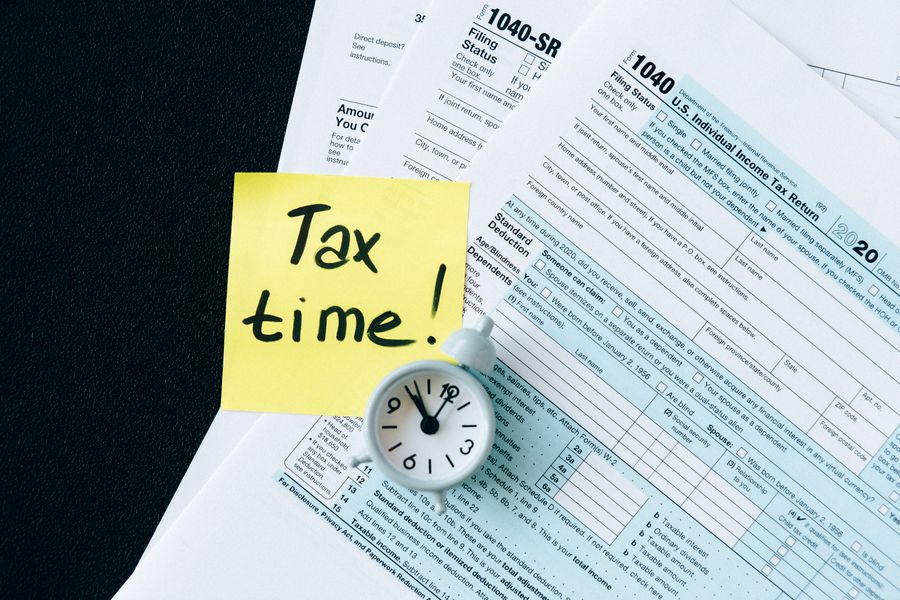
A stack of tax forms with a clock and yellow sticky note saying 'Tax time!' indicating urgency.
Photograph by Nataliya Vaitkevich via Pexels
Editorial note. Independent reporting and analysis. Nothing here is sponsored or paid for. How we work.

Nothing arrived to say it had changed

An organisation holding your details has no way of learning that you moved, changed your name, stopped working somewhere or gained a dependant. Nothing about those events produces a message to them. The file simply carries on saying what it said, and it says it with exactly the same confidence as the day it was written.

That is the whole reason for the annual form asking questions you have already answered. It isn’t a memory failure, and it is rarely a check on honesty either. It is a scheduled attempt to find the entries that have quietly stopped being true, in a file where nothing distinguishes those entries from the ones that are still correct.

Some facts decay much faster than others

Well-designed re-declaration is not uniform, because different categories of information age at very different rates. A date of birth is fixed. A name changes occasionally. An address changes for a substantial share of people every few years, and circumstances like income, household composition or employment can change several times in one.

Review cycles are built around those rates. Rapidly decaying information is confirmed frequently or on every contact, stable information is confirmed rarely, and fixed information is generally not asked about again at all. When a form seems to ask about the volatile items in unnecessary detail while skipping the ones you think of as important, that ordering is usually why.

A declaration is a different object from a data field

There is a second reason, and it is not really about accuracy at all. A declaration is a statement made by a person at a moment, and it carries a date and a name in a way that a stored value does not. An entitlement or a permission that depends on circumstances needs a current statement, not merely current data, because the statement is what the decision rests on.

This is why re-declaring occasionally involves confirming something the organisation demonstrably already knows, which feels like theatre from outside. The information is not what is being collected. The act of confirming it is, and the difference matters most exactly when something later turns out to have been wrong.

Confirming and updating are handled differently

From the inside, a form returned with no changes and a form returned with three are two quite different events. The first ends the review. The second starts work: an amendment has to be validated, sometimes evidenced, occasionally routed to somebody with authority to make it, and possibly reflected in a decision that was made under the old details.

That asymmetry is the reason a change buried in a returned form can move slowly while the review itself completes quickly. It is also why organisations increasingly ask you to tick that nothing has changed rather than to write it all out again. A tick answers the question the review is asking, and typing the same address a fourth time introduces a fresh chance of getting it wrong.

Between reviews, the update has to come from you

The corollary of a scheduled review is a stretch of time during which nobody is looking. A change reported in month two is acted on in month two; the same change discovered at the annual review has been absent from the file for the better part of a year, and everything decided in that period was decided on old information.

This is where the reciprocal duty on a form is doing real work. The line asking you to report changes promptly is not decoration; it is the mechanism covering the gap between reviews, and it exists because the review alone is far too slow to be the only route in. Reporting a change once, in writing, at the time it happens, is worth several perfectly filled-in review forms afterwards.

Making the annual round cheaper

Most of the effort in these exercises goes on retrieving information you already provided rather than on the answering itself. Keeping the last version of what you declared — a copy of the form, a photograph, a note of the figures and the dates — turns half an hour of searching into ten minutes of checking, and it makes an inconsistency between two years visible before somebody else spots it.

And where a question genuinely does not apply, saying so is better than leaving it blank. A review form is read for changes, and an empty field is ambiguous in a way that a short sentence is not. The reader is looking for what moved. Telling them plainly which things did not is the most useful thing on the page.

Common questions

Why ask again when they already hold the answer?

Because holding a value and holding a current declaration are different things. Reviews are looking for the entries that stopped being true, and for decisions that depend on circumstances the statement itself is what is needed rather than the data.

Do I have to wait for the review to report a change?

No, and waiting is usually the worse option. Reviews run on a cycle that can be a year long, and anything decided in the meantime is decided on the old details, so reporting a change when it happens is what the reporting line on the form is for.

Why does a change take longer than the review itself?

Because a confirmation ends the review while an amendment starts work — validation, sometimes evidence, occasionally a revisit of a decision made under the previous details. The two travel through different parts of the process despite arriving on the same page.

Paperworkrecordsformsrenewalsdata
Lukas Brenner
Features writer, What Nobody Explains

Lukas has written about behind the counter, paperwork, queues & waiting for most of the last decade and thinks most subjects are more interesting once you know how they work.