Skip to content
The part of the process nobody writes down
What Nobody ExplainsThe part of the process nobody writes down

Paperwork

Why the form insists on block capitals in separate boxes

The instruction is about how the form will be read afterwards, and the little boxes are a data-capture technique rather than a preference for neatness.

By Lukas Brenner3 min read

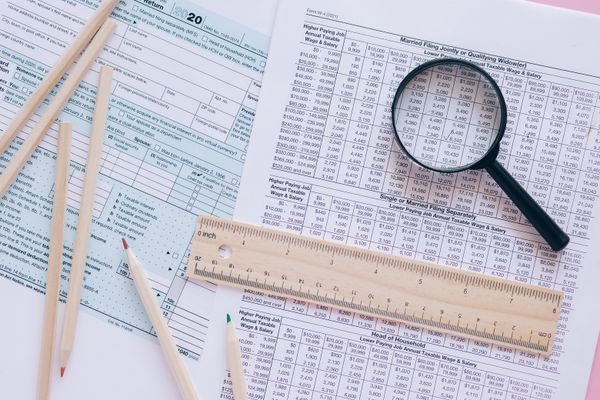
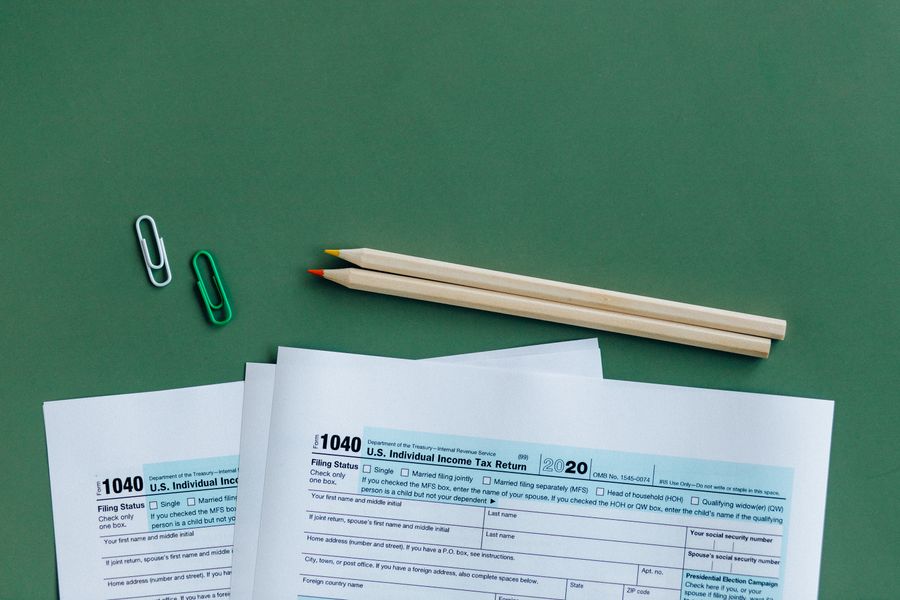
U.S. tax forms with pencils and paperclips on green surface in a flat lay setup.
Photograph by Nataliya Vaitkevich via Pexels
Editorial note. Independent reporting and analysis. Nothing here is sponsored or paid for. How we work.

The instruction is about the next reader, not about you

A form asking for block capitals, one letter per box, black ink only, looks like an unusually strict schoolteacher got hold of the design. It’s really a specification for the reading that happens next, and everything about it follows from a decision made much earlier about how the paper turns into data.

There are two candidates for that reading. Either a person will type the contents into a system, or a machine will scan the sheet and attempt to recognise the characters. The instructions differ slightly between those two futures, but both of them are asking for the same thing: handwriting that can be read one character at a time without context.

Separate boxes remove the hardest part of reading handwriting

Recognising joined handwriting requires segmenting a continuous line into characters before identifying any of them, and segmentation is much harder than identification. Boxes eliminate that step entirely. Each cell contains exactly one character, its position is known in advance, and the reader — human or otherwise — is left with a far simpler question.

Capitals help for a related reason. The uppercase alphabet has fewer ambiguous pairs, avoids the ascenders and descenders that collide between lines, and doesn’t vary with personal style nearly as much as cursive does. It is also self-limiting: people write capitals more slowly and more deliberately, and slower writing is more legible writing.

The boxes also fix the field length

A row of boxes is a visible declaration of how many characters the field will hold. That is honest, if inconvenient, and it moves the problem to a place where you can see it. A ruled line of the same physical width holds an unknown number of characters, so the truncation happens invisibly during typing rather than obviously during writing.

It has a further quiet benefit. Counting boxes lets whoever designed the form indicate structure — dates in a fixed pattern, references in known groups, postal codes split at the point where they divide. Where the grouping matches how the value is actually stored, transcription errors fall, because a person copying it can check group by group rather than as one long string.

Colour rules exist because of the copy

Requirements about black ink and about not using pencil are rarely about formality. They are about reproduction. Scanners and photocopiers convert an image to something closer to black and white using a threshold, and light blue, green or pencil marks can fall on the wrong side of it and vanish from the copy while remaining perfectly visible on the original.

Pencil carries a second problem, which is that it can be erased without trace. For any document that has to remain fixed after submission, an erasable medium defeats the point of submitting it. This is also why crossing out and initialling is preferred to correction fluid: the crossing-out leaves the original visible underneath and shows that a change was made, whereas an obliterated field simply cannot be audited.

What actually goes wrong when the rules are ignored

The failures are duller than people imagine and more expensive. A character read incorrectly during transcription produces a record that fails to match against a reference, and the mismatch surfaces days later at a stage where nobody can see the original form. Two characters that resemble each other in ordinary handwriting — a one and a seven, a five and an S, a zero and the letter O — cause a disproportionate share of these.

Automated reading fails differently. Recognition systems return a confidence score alongside each character, and anything below a threshold is routed to a person for manual review. A form written outside the boxes does not get rejected; it gets diverted into a slower, human queue, and the delay it causes never announces its own reason.

Filling one in so it survives the journey

Write the characters that get confused with deliberate care, keep everything inside its cell, and leave a blank box where a value is shorter than the field rather than centring it, since position within the row can be meaningful. If a value genuinely will not fit, write what fits and attach the full version rather than compressing it into an unreadable jumble.

And keep a photograph of the completed sheet before it leaves your hands. When a mismatch turns up weeks later, the only question anyone can usefully answer is what the form actually said, and by then the form is somewhere else entirely.

Common questions

Does it really matter if I use ordinary handwriting?

It rarely causes rejection and it frequently causes delay, because forms that cannot be read confidently are diverted to a manual review queue or transcribed with errors that surface later. The instruction is about the speed and accuracy of the reading rather than about neatness for its own sake.

Why can I not use pencil?

Pencil can be erased without leaving a trace, which defeats the purpose of a document that must stay fixed after submission, and it often reproduces poorly when scanned or photocopied. Black ink survives both problems, which is why it is specified so consistently.

What should I do if my answer is longer than the boxes?

Write the portion that fits, do not compress characters into shared boxes, and supply the full version separately with a clear note that it continues. A truncated but legible value can be matched and corrected; an illegible one produces a record nobody can reconcile.

Paperworkformsdata capturetranscriptionpaperwork
Lukas Brenner
Features writer, What Nobody Explains

Lukas has written about behind the counter, paperwork, queues & waiting for most of the last decade and thinks most subjects are more interesting once you know how they work.