Skip to content
The part of the process nobody writes down
What Nobody ExplainsThe part of the process nobody writes down

Paperwork

Why a signature still exists when nobody compares it to anything

The mark on the page is doing four jobs, and verifying handwriting has not been the main one for a very long time.

By Lukas Brenner3 min read

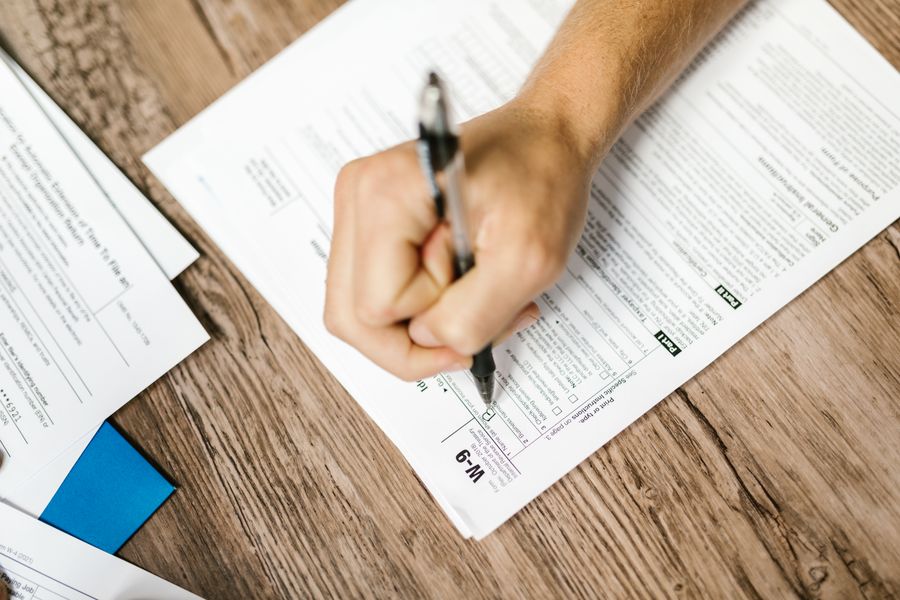
Hand writing on a W-9 tax form using a ballpoint pen on wooden desk.
Photograph by RDNE Stock project via Pexels
Editorial note. Independent reporting and analysis. Nothing here is sponsored or paid for. How we work.

Almost nobody checks the handwriting

The folk explanation for signing things is that somebody will compare the squiggle against a specimen and detect an impostor. That comparison does still happen in a small number of settings, and in the overwhelming majority of everyday paperwork it does not happen at all. Nobody holds a specimen. Nobody would examine it if they did.

Yet the requirement persists across nearly every process that carries any consequence, which suggests the signature is earning its place some other way. It is, and it’s doing several things at once, none of which depends on the shape of the letters.

The main job is marking a moment of assent

A signature converts reading into agreeing. Everything above the line is information; the act of signing is the point at which a person accepts it and after which they are treated as having done so. That boundary is genuinely useful inside a process, because it gives every later step something unambiguous to point back at.

The physical awkwardness is part of the function. Signing requires stopping, taking up a pen or drawing on a screen, and performing something deliberate. Design that requires a deliberate act at the moment of commitment is not decoration; it makes accidental agreement harder, and it makes a person who did agree more likely to remember doing so. Whether a slightly clumsy gesture on a delivery tablet still achieves that is a fair question, and probably it achieves less than it used to.

It also fixes a date and a person to a document

A signed form ties three things together: a document in a particular state, an identified person, and a date. Change any element and the signature no longer matches the set. That is why an amended form usually has to be signed again, and why altering something after signing requires initials beside the change rather than a quiet correction.

This is also the reason for the small print asking you to confirm the information is accurate to the best of your knowledge. It shifts responsibility for the content onto the person who supplied it, and it gives the receiving organisation a defensible position if the content turns out to be wrong. Both parties gain something from that clarity, which isn’t always obvious from the signing side of the desk.

Witnesses and countersignatures are a separate mechanism

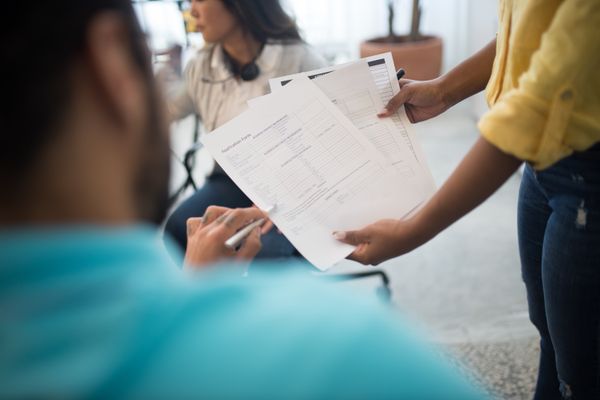
Where a form asks for somebody else to sign, a different job is being done. A witness attests that they saw the signing happen, which addresses a question the signature itself cannot: whether the named person actually made the mark, and did so willingly rather than under pressure.

That is why witness requirements come with conditions about who may serve — commonly not a relative, not a beneficiary, not somebody with an interest in the outcome. The conditions exist because the witness is providing independence rather than familiarity, and a witness who benefits from the document provides neither. The requirement to include an address is likewise practical: a witness who cannot later be found has attested to something unverifiable.

Electronic signing keeps the function and changes the evidence

When signing moved onto screens, the drawn shape became close to meaningless while the surrounding evidence became far richer. What an electronic signing platform records is a trail: which document was presented, at what time, to what email address, from what device and network, and what was clicked. That bundle is generally stronger evidence than a pen mark on paper ever was.

It also explains behaviour that seems fussy, such as a link that expires, a code sent separately, or a refusal to accept a signature from an address other than the one on file. Each of those is a step in building the trail. The visible signature is increasingly ceremonial, and the ceremony is retained because people expect it and because the moment of assent still has to be marked somehow.

What to do at the point of signing

Two habits are worth keeping. Do not sign a document with blanks in it that somebody else will complete afterwards, because the signature attaches to whatever the document later says. And take a copy at the moment of signing, since the signed version is the one that matters and it is about to leave your possession.

If something on the form is wrong, correcting it before signing costs a minute. Correcting it afterwards means locating the record, establishing which version was signed, and producing a new one — a process that in most organisations runs to weeks rather than minutes, entirely because the original act cannot be quietly undone.

Common questions

Does my signature have to look the same every time?

For everyday paperwork, consistency rarely matters because no comparison is made. Where a specimen is genuinely held — certain banking and legal contexts — consistency does matter, and a signature that varies wildly can cause a document to be queried.

Why does a witness have to be unrelated to me?

Because a witness is providing independent confirmation that the signing happened and was voluntary. Somebody who benefits from the document, or who is closely connected to the signer, cannot supply that independence, which is why the exclusions are written into the form.

Is a typed name at the end of an email a signature?

It can be, depending on context and on what the parties intended, and this is precisely the sort of question that varies by jurisdiction and circumstance. It is not something to settle from a general article; where it matters, the position should be checked with somebody qualified to advise on it.

Paperworksignaturesformsrecordspaperwork
Lukas Brenner
Features writer, What Nobody Explains

Lukas has written about behind the counter, paperwork, queues & waiting for most of the last decade and thinks most subjects are more interesting once you know how they work.