Skip to content
The part of the process nobody writes down
What Nobody ExplainsThe part of the process nobody writes down

Queues & Waiting

What changes when a queue can be seen by the people in it

Publishing the length of a wait alters who joins, when they arrive and how they behave, which makes visibility an operational decision rather than a courtesy.

By Nikhil Bose3 min read

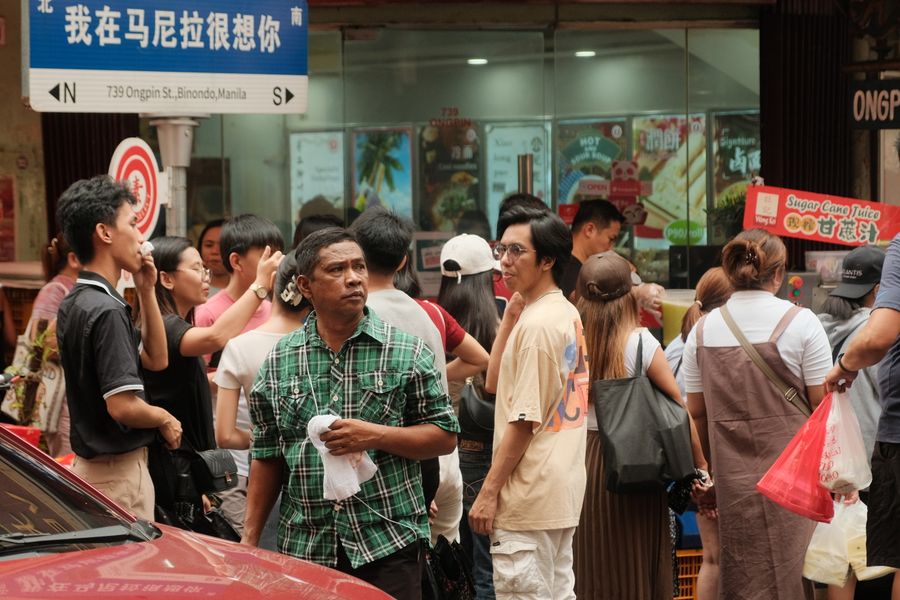
A lively street scene in Binondo, Manila's Chinatown, showcasing daily life.
Photograph by Zachary Angeles via Pexels
Editorial note. Independent reporting and analysis. Nothing here is sponsored or paid for. How we work.

A visible queue is a different system from a hidden one

A line you can see, a number on a screen, a published waiting time on a website: each of these puts information into the hands of people who are deciding whether to join. The moment that happens, the queue stops being a passive accumulation and becomes something that people route around.

That’s why visibility is treated as a design decision rather than an obvious good. It changes demand rather than merely describing it, and the change is not always in the direction the operator wanted. Publishing a wait is a lever, and levers can be pulled the wrong way.

People leave, and leaving is not always bad

The two behaviours a visible queue produces are declining to join and giving up partway through. Both look like failure and neither straightforwardly is. Somebody who sees a long wait and returns tomorrow has removed themselves from a peak, which is the outcome the operator would have chosen for them.

What matters is who leaves. If visibility deters people with quick, easy transactions while those with long ones stay, the queue empties of exactly the work that would have moved fastest. This is why waiting information often comes attached to a suggestion — an alternative channel, a quieter time, a different location — because the useful version of leaving is being redirected rather than simply discouraged.

Published times move demand, then have to be believed

Where waits are published in advance, they shape arrivals directly: people go to the quiet branch, or come at the hour the graph says is calm. The information is genuinely useful and it is also self-undermining, because enough people acting on it will make the quiet hour busy.

This is a real difficulty for anybody publishing figures, and it is usually managed by publishing patterns rather than live promises — a typical Tuesday afternoon rather than a guarantee about this one. It also explains the hedged phrasing on most waiting information. A figure presented as a forecast invites a complaint when it is wrong, while a figure presented as a recent average invites a decision, and only one of those is what the publisher wants.

Visibility forces a commitment to fairness

A hidden queue can be reordered quietly. A visible one cannot, because everybody in it is watching the sequence and will notice any departure from it. Once you show people the order, you have effectively promised to honour it, and any legitimate exception now requires an explanation that would not have been needed before.

This has a cost that is worth acknowledging. Reasonable priority — an urgent case, a person who cannot stand, a transaction that will take ten seconds — becomes harder to apply in front of an audience, because it reads as queue-jumping unless somebody explains it. Some operations solve this by making the priority route physically separate, which restores the flexibility by removing the comparison.

Visible progress and visible position are different promises

Showing the current number being served tells people the queue is moving. Showing their own position tells them where they stand. Showing an estimated time commits to an outcome, and it is the only one of the three that can be straightforwardly wrong.

Operators generally adopt them in that order of caution, and the reasoning is practical rather than evasive. Position is a fact and cannot be contradicted. An estimate depends on how long the transactions ahead of you turn out to take, which nobody knows, and a wrong estimate creates a second problem — people arriving at the counter with a grievance about the estimate as well as the wait.

Reading a queue that has been made visible

The useful skill is working out what the display is actually measuring. A number being served tells you about throughput but nothing about how many people are ahead of you across other queues sharing the same counters. A published average is usually taken over a period long enough to smooth away exactly the peak you are standing in.

And where a service offers both a visible and an invisible route — a hall with a screen and a phone line with none — the invisible one isn’t necessarily the slower one. It is simply the one where nobody has committed to showing you the order. That is worth remembering before choosing the queue you can see purely because you can see it.

Common questions

Why do published waiting times so often turn out to be wrong?

Because they are usually recent averages rather than forecasts, and the wait you experience depends on how long the transactions immediately ahead of you take. Published figures are best treated as a comparison between times or locations rather than a prediction about your own visit.

Does a screen showing the number being served tell me my wait?

Only loosely. It shows movement, but the counters may be serving several queues at once, and the numbers do not reveal how long each remaining transaction will take. Position information is more reliable than throughput information for estimating your own wait.

Why is priority handled at a separate desk?

Partly for capability and partly for visibility. Applying priority within a line that everybody can see requires a public explanation each time, whereas a separate route allows the same decision to be made without inviting comparison in front of the queue.

Queues & Waitingqueuestransparencydemandprocess
Nikhil Bose
Reporter, What Nobody Explains

Nikhil writes the explanatory pieces on behind the counter, paperwork, queues & waiting and would rather show the working than assert the conclusion.